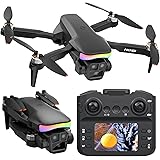
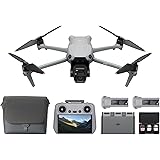
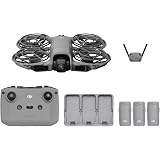
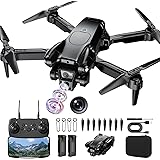
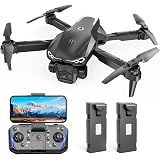
Imagine, if you will, the sheer fascination of watching something effortlessly defy gravity. You see it zip, hover, and turn with remarkable agility. When the video above plays, the whirring and buzzing sounds tell a story of mechanical ingenuity, particularly showcasing a single motor drone in action. It’s a captivating display, leaving many to wonder about the hidden mechanics that allow such a device to perform its aerial ballet.
While multi-rotor drones, like quadcopters, are commonly observed today, the single-rotor design holds a special place in the world of unmanned aerial vehicles. It operates on principles more akin to a traditional helicopter, yet it often presents a unique challenge and elegance for engineers and hobbyists alike. Understanding what drives these fascinating machines, especially the role of the 1BLDC motor drone, opens up a new appreciation for their capabilities.
Deconstructing the Single Motor Drone: A Helicopter’s Kin
When most people think of drones, images of multi-propeller aircraft often come to mind. These popular designs achieve flight and control by varying the speed of multiple motors. By contrast, a single motor drone, often referred to as a helicopter drone, relies on a solitary main rotor for lift, much like its full-sized counterparts.
The core concept is deceptively simple: one powerful motor spins a large rotor, creating the necessary lift to get off the ground. However, the true complexity emerges when considering how such a drone achieves directional control and stability. Without the individual thrust vectors of multiple propellers, a single main rotor system must employ intricate mechanical adjustments to pitch, roll, and yaw the aircraft, which is a significant difference from multi-rotor systems.
The Powerhouse: Understanding the BLDC Motor Drone
Central to the performance of modern drones, including our featured single motor drone, is the Brushless Direct Current (BLDC) motor. This type of motor has revolutionized drone technology, offering a level of efficiency and power that was previously unattainable with traditional brushed motors.
A BLDC motor operates without physical brushes, unlike older motor designs. Instead, electronic commutators are used to switch the current in the motor coils, which then generate magnetic fields that interact with permanent magnets on the rotor. This design offers several critical advantages:
- Increased Efficiency: Energy is not lost to friction from brushes, meaning more battery power is converted into thrust.
- Durability and Longevity: The absence of brushes means fewer wearing parts, leading to a much longer lifespan and less maintenance.
- Higher Power-to-Weight Ratio: BLDC motors are incredibly powerful for their size, essential for lifting and maneuvering drones.
- Precise Control: Electronic speed controllers (ESCs) can precisely regulate the motor’s RPM, which is crucial for stable flight and agile maneuvers in a 1BLDC motor drone.
Therefore, the BLDC motor is not merely a component; it is the very heart that provides the power and responsiveness needed for a single motor drone to perform its graceful and precise movements.
Navigating the Skies: How Control is Achieved
The ability of any aircraft to fly involves more than just generating lift; it also requires precise control over its attitude and direction. For a single motor drone, this is accomplished through a sophisticated interplay of aerodynamics and mechanics.
Generating Lift and Controlling Ascent/Descent
Lift is fundamentally created by the main rotor’s spinning blades. As they rotate, they push air downwards, generating an upward force. To control the drone’s altitude, the speed of the main BLDC motor is carefully adjusted. A higher RPM increases thrust, causing the drone to ascend, while a lower RPM reduces thrust, allowing it to descend.
Achieving Pitch and Roll
Unlike multi-rotor drones that tilt by speeding up or slowing down specific motors, a single motor drone employs a mechanism known as a “swashplate.” This intricate device changes the angle of attack (pitch) of the main rotor blades cyclically as they rotate. For instance:
- To move forward (pitch nose down), the angle of attack on the blades is increased as they pass over the rear of the drone and decreased as they pass over the front.
- To roll left or right, a similar cyclic adjustment is made to the blade angles as they pass over the sides.
This subtle but powerful adjustment mechanism is what grants the single motor drone its remarkable agility and precision in the air.
Yaw Control: Counteracting Torque
A spinning main rotor generates torque, which would cause the entire drone body to spin in the opposite direction. To counteract this and allow for yaw (rotation around its vertical axis), a separate mechanism is required. Commonly, a smaller tail rotor is used. By varying the thrust of this tail rotor, or by changing its pitch, the drone’s yaw can be precisely controlled, allowing it to turn left or right.
In some advanced designs, a system called “NOTAR” (NO TAil Rotor) is employed, which uses directed air jets from the main rotor system to provide anti-torque and directional control. However, for most hobbyist helicopter drone models, the tail rotor remains the primary method.
Advantages and Unique Challenges of Single Motor Drone Designs
While they might appear less common than their multi-rotor counterparts, single motor drones offer distinct advantages and face unique challenges that shape their applications.
The Benefits
- Efficiency: Generally, single motor designs can be more aerodynamically efficient, especially for sustained forward flight, leading to potentially longer flight times compared to many multi-rotor drones of similar size.
- Robustness of the Main Drive: With one large main motor and rotor, the primary lift system can be very robust, capable of handling significant loads.
- Simpler Power Distribution: Only one primary high-power output is needed from the battery, streamlining some aspects of the electrical design.
- Distinct Flight Characteristics: They offer a flight experience more akin to traditional helicopters, which can be appealing for experienced RC pilots.
The Obstacles
Despite their advantages, single motor drone designs are not without their complexities:
- Mechanical Complexity: The swashplate and tail rotor mechanisms are mechanically intricate, involving more moving parts, which can increase build difficulty and maintenance requirements.
- Control Difficulty: Piloting a single motor drone often requires a higher skill level, as control inputs can feel more sensitive and dynamic compared to multi-rotor drones. The response of a 1BLDC motor drone, with its powerful main rotor, needs fine tuning.
- Lack of Redundancy: A single point of failure in the main motor or rotor system means a catastrophic loss of lift, whereas a multi-rotor drone might be able to limp to a landing with a single motor failure.
- Gyroscope Effects: The large spinning rotor can introduce powerful gyroscopic effects that must be managed by the flight controller, especially during rapid maneuvers.
Embarking on Your Own Single Motor BLDC Drone Project
For those inspired by the mechanics and performance of the drone in the video, delving into the world of single motor drone building can be a rewarding, albeit challenging, endeavor. It necessitates a basic understanding of electronics, aerodynamics, and mechanical assembly.
Key components for such a project would typically include:
- A powerful BLDC motor.
- An Electronic Speed Controller (ESC) specifically matched to the motor.
- A flight controller capable of handling the complexities of single-rotor dynamics (often based on helicopter-specific firmware).
- A strong, lightweight frame.
- Main rotor blades and a tail rotor assembly (motor and blades).
- Servos for controlling the swashplate and tail rotor pitch.
- A high-capacity battery.
- A receiver and transmitter for remote control.
Starting with established kits or well-documented open-source projects is often recommended for beginners. This allows for a structured learning path, gradually introducing the nuances of tuning, balancing, and flying these sophisticated machines. The satisfaction of seeing a 1BLDC motor drone you’ve assembled take to the air is truly immense, fostering a deeper connection with the underlying engineering.
Unspinning Your Viral Single-Motor Drone Queries
What is a single motor drone?
A single motor drone, often called a helicopter drone, uses one main powerful rotor for lift, similar to a traditional helicopter. It relies on mechanical adjustments to control its movement and direction.
What is a BLDC motor and why is it important for drones?
A BLDC (Brushless Direct Current) motor is a highly efficient and powerful type of motor used in modern drones. It’s important because it provides excellent power-to-weight ratio, durability, and precise control for stable flight.
How does a single motor drone change direction or steer?
Single motor drones steer using a ‘swashplate’ mechanism to tilt the main rotor blades, allowing for forward, backward, or sideways movement. A separate tail rotor is used to turn the drone left or right by counteracting the main rotor’s spin.
Are single motor drones easy for beginners to fly or build?
No, single motor drones are generally more mechanically complex to build and often require a higher skill level to pilot. This is due to their intricate control systems and sensitive flight characteristics.