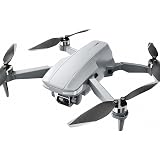
Global drone market valuation exceeded $25 billion in the past year, with projections indicating a compound annual growth rate nearing 18% through 2030. This robust expansion underscores the critical role of sophisticated drone technology across various sectors. The mechanical sounds heard in the accompanying video often signify the intricate interplay of components within a high-performance uncrewed aerial vehicle (UAV). Understanding these operational acoustics can provide an initial diagnostic window into a drone’s health and flight readiness. Indeed, every whir, hum, and subtle vibration conveys vital information about system integrity and performance envelopes. Such auditory cues are invaluable for expert operators.
Advanced Drone Propulsion Kinetics
The core of any drone’s aerial capability lies in its propulsion system. This complex assembly includes motors, electronic speed controllers (ESCs), and propellers, each optimized for specific thrust-to-weight ratios. Brushless DC motors dominate the high-performance drone sector, offering superior efficiency and durability over their brushed counterparts. These motors convert electrical energy into mechanical rotation with remarkable precision. Engineers design these systems to withstand significant operational stresses, ensuring reliable performance across diverse flight profiles. Understanding their operational parameters is paramount for maximizing flight endurance and payload capacity.
ESC telemetry provides real-time data on motor RPM, current draw, and temperature, crucial for advanced diagnostics. Optimal propeller selection is equally vital, impacting both lift generation and acoustic footprint. Different propeller pitches and diameters are chosen based on the drone’s intended mission, whether it is high-speed maneuvers or extended, stable hovering. Imagine if a drone’s propellers were mismatched; performance degradation would be immediate and severe. Consequently, meticulous component pairing is an engineering imperative for superior flight dynamics.
Precision Aerodynamics and Flight Dynamics
Modern drones leverage sophisticated aerodynamic principles to achieve stable and agile flight. The airframe design plays a significant role in minimizing drag and optimizing lift distribution. Computational Fluid Dynamics (CFD) simulations are extensively used during the design phase to predict aerodynamic coefficients. These simulations help engineers fine-tune the drone’s shape for maximum efficiency and stability. Proper weight distribution further enhances flight characteristics, preventing unwanted oscillations or instability. A perfectly balanced UAV handles external forces like wind gusts with greater resilience.
Flight controllers act as the brain of the drone, processing data from numerous sensors, including accelerometers, gyroscopes, and magnetometers. These Inertial Measurement Units (IMUs) feed critical attitude and positional data to the flight algorithms. Advanced control loops, often employing Proportional-Integral-Derivative (PID) controllers, adjust motor speeds in real-time. This dynamic adjustment maintains the desired orientation and trajectory, ensuring precise maneuvers. Consequently, understanding these intricate feedback systems is crucial for custom tuning and troubleshooting.
Integrated Sensor Architectures for Enhanced Operations
The utility of a drone extends far beyond basic flight, particularly in specialized commercial applications. Advanced sensor architectures transform a simple flying platform into a powerful data acquisition tool. Global Navigation Satellite Systems (GNSS) receivers, including GPS, GLONASS, and Galileo, provide precise positional data. Furthermore, RTK (Real-Time Kinematic) and PPK (Post-Processed Kinematic) technologies enhance positional accuracy to centimeter-level precision. This high fidelity is indispensable for mapping, surveying, and autonomous navigation in complex environments.
Beyond navigation, specialized payloads integrate a multitude of sensors. These include high-resolution RGB cameras for photogrammetry, thermal cameras for industrial inspections, and multispectral sensors for precision agriculture. Lidar (Light Detection and Ranging) systems generate detailed 3D point clouds, crucial for terrain mapping and obstacle avoidance. Imagine if a drone could map an entire construction site with sub-centimeter accuracy in minutes; such capabilities are now standard. Careful calibration and integration of these diverse sensor types are paramount for data integrity.
Optimizing Drone Performance and Longevity
Maximizing a drone’s operational lifespan and performance requires a diligent approach to maintenance and operational protocols. Battery management is a critical factor, as lithium-polymer (LiPo) batteries are sensitive to overcharging, deep discharging, and temperature extremes. Implementing proper charging cycles and storage conditions significantly extends battery health. Regularly inspecting propellers for any nicks or bends prevents vibrational imbalances that could strain motors and bearings. Even minor damage can severely impact flight stability.
Firmware updates for flight controllers and ESCs often introduce performance enhancements and critical bug fixes. Maintaining up-to-date software ensures optimal functionality and access to the latest control algorithms. Post-flight data analysis, including motor logs and sensor outputs, can reveal subtle performance anomalies before they escalate into major issues. Consequently, a proactive maintenance schedule is indispensable for commercial drone operators. This comprehensive approach safeguards equipment investment and ensures consistent, reliable mission execution for every drone in the fleet.
Your Aerial Inquiries, Answered Swiftly
What helps a drone fly?
Drones fly using a propulsion system, which includes motors, electronic speed controllers (ESCs), and propellers. These parts work together to create the necessary thrust and lift.
What is the ‘brain’ of a drone?
The flight controller acts as the brain of the drone, processing information from sensors like accelerometers and gyroscopes. It uses this data to adjust motor speeds and keep the drone stable during flight.
Why are the sounds a drone makes important?
The mechanical sounds a drone produces can provide initial clues about its health and flight readiness. These auditory cues can help operators diagnose system integrity and performance.
How can I keep my drone’s battery in good condition?
To maximize battery life, you should follow proper charging cycles and store lithium-polymer (LiPo) batteries correctly. Avoid overcharging, deep discharging, and exposing them to extreme temperatures.