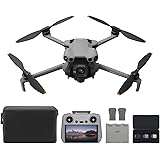
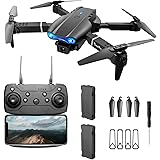
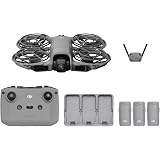
The ubiquity of drones is undeniable. Unmanned Aerial Vehicles (UAVs) have transformed numerous industries. From intricate military operations to precision agriculture and dynamic entertainment, their impact is vast. The video above provides an excellent primer. It covers how a quadcopter truly achieves flight. This discussion delves deeper into the fundamental physics. We explore the sophisticated principles behind drone flight and maneuverability.
The Physics of Drone Lift: Overcoming Gravity
A quadcopter’s flight initiates with lift. This upward force must counteract the drone’s weight. The core principle relies on Newton’s Third Law of Motion. Each of the four propellers pushes air downward. An equal and opposite reaction force is generated. This reactive force is what lifts the drone.
Propeller design is critical here. Their aerodynamic shape carves through the air. This action creates a pressure differential. The air below the blades is compressed. The air above is slightly rarefied. This pressure difference contributes to upward thrust. Achieving stable hovering requires precise thrust. The total upward thrust must exactly match the drone’s gravitational pull. Excess thrust causes ascent. Insufficient thrust prevents takeoff or causes descent.
Blade pitch also plays a vital role. It dictates how much air is displaced. Variable pitch propellers are less common on quadcopters. However, they are standard on single-rotor helicopters. Fixed-pitch propellers are usually found on multi-rotor drones. These drones adjust thrust via motor speed changes.
Managing Torque: Essential for Quadcopter Stability
Unbalanced torque presents a significant challenge. A rotating propeller generates torque. This torque tends to rotate the drone body. If all propellers spun unidirectionally, the drone would spin uncontrollably. This spinning would occur in the opposite direction.
Quadcopter design elegantly solves this issue. Two propellers rotate clockwise. The other two rotate counterclockwise. This arrangement perfectly cancels out reactive torque. The opposing torques negate each other. This ensures the drone’s body remains stable. Stability is paramount for controlled flight. This design enables precision flight. It allows the flight controller to manage orientation effectively.
For example, a typical quadcopter configuration involves motors 1 and 3 spinning clockwise. Motors 2 and 4 spin counterclockwise. This symmetrical design maintains equilibrium. Without this counter-rotation, navigation would be impossible. The drone would be a spinning blur.
Mastering Maneuverability: Pitch, Roll, and Yaw
Drone maneuverability depends on three rotational movements. These are pitch, roll, and yaw. Each axis of rotation allows specific movements. These enable versatile flight dynamics.
Pitch: Tilting Forward and Backward
Pitch involves rotation around the Y-axis. This causes the drone to tilt forward or backward. To move forward, the front propellers slow down. Simultaneously, the rear propellers accelerate. This creates a forward tilt. Consequently, a horizontal force component is generated. This horizontal component drives the drone forward. Backward movement reverses this process. The front propellers accelerate. The rear propellers decelerate. This results in a backward tilt and movement.
This differential thrust is managed by the flight controller. It constantly adjusts motor speeds. These adjustments are made in milliseconds. They respond to pilot input. These systems ensure smooth transitions. Smooth transitions are essential for stable flight.
Roll: Sideways Movement and Stability
Roll is rotation around the X-axis. This action causes the drone to tilt sideways. Tilting to the right facilitates rightward movement. Leftward tilting enables leftward movement. Similar to pitch, this involves differential thrust. Propellers on one side accelerate. Propellers on the opposite side decelerate. This imbalance creates the desired tilt. The horizontal force component then dictates sideways motion.
Maintaining a level flight path also requires roll control. External factors like wind can induce roll. The flight controller autonomously corrects these disturbances. Inertial Measurement Units (IMUs) detect angular velocity. Gyroscopes and accelerometers provide this crucial data. This data informs corrective motor adjustments.
Yaw: Directional Heading Control
Yaw is rotation around the Z-axis. This movement determines the drone’s facing direction. It does not involve tilting the drone body. Instead, it subtly adjusts torque balance. To yaw clockwise, counterclockwise spinning propellers accelerate. Simultaneously, clockwise spinning propellers decelerate. This creates a net torque imbalance. This imbalance causes the drone to rotate clockwise. Counter-clockwise yaw uses the opposite mechanism. This delicate balance of propeller speeds is key.
Precise yaw control is vital. It allows the drone to change its orientation. The drone can then point cameras or sensors in any direction. Advanced flight controllers use proportional-integral-derivative (PID) algorithms. These algorithms maintain accurate yaw control. They respond quickly to inputs. This ensures responsive and stable rotations.
The Role of the Flight Controller
The human pilot doesn’t directly control motor speeds. A sophisticated flight controller manages these intricacies. This onboard computer receives pilot commands. It interprets these commands. Then, it translates them into specific motor adjustments. Sensors like accelerometers and gyroscopes provide real-time data. This data includes the drone’s orientation and angular velocity. The flight controller processes this information continuously. It makes thousands of adjustments per second. This ensures stable and responsive flight. Without this powerful brain, managing drone physics would be impossible.
Advanced flight controllers integrate GPS modules. They also often include barometers for altitude hold. Magnetometers provide compass headings. These components work in concert. They enable complex autonomous flight paths. They also assist with “return-to-home” functionalities. Understanding drone flight mechanics is crucial for designers. It is also important for hobbyists. These insights improve flight performance. They also enhance troubleshooting capabilities.
Decoding Drone Flight: Your Physics Queries
What makes a drone lift off the ground?
Drones lift off by using their propellers to push air downwards. This creates an equal and opposite upward force, known as thrust, which overcomes gravity.
How does a drone avoid spinning uncontrollably when its propellers are rotating?
Quadcopter drones prevent spinning by having two propellers rotate clockwise and the other two rotate counterclockwise. This setup cancels out the twisting force (torque), keeping the drone stable.
What do ‘pitch,’ ‘roll,’ and ‘yaw’ mean in drone flight?
Pitch is when the drone tilts forward or backward, roll is when it tilts sideways, and yaw is when it rotates to change its facing direction without tilting. These movements allow the drone to maneuver.
Who is actually controlling the drone’s movements when a pilot flies it?
An onboard computer called a flight controller manages the drone’s movements. It receives pilot commands and sensor data, then constantly adjusts motor speeds to ensure stable and responsive flight.