In the landscape of modern agriculture, transformation is a constant. As farming practices evolve, the integration of advanced technology becomes increasingly vital for optimizing yields, conserving resources, and making informed decisions. The video above introduces how agricultural drones are redefining what is possible in the fields, offering a fresh perspective on farm management and operational efficiency.
For centuries, agricultural practitioners have sought innovative methods to enhance their work. Today, a significant leap forward is being observed with the widespread adoption of drone technology. These unmanned aerial vehicles (UAVs) are no longer mere novelties; they are becoming indispensable tools that elevate precision, streamline processes, and unlock valuable insights for decision-making. Different types of drones, each with unique capabilities, are being deployed across farms globally, addressing a diverse array of needs from precise crop spraying to comprehensive land surveying.
How Agricultural Drones Transform Farming Operations
The benefits brought by drones in agriculture are extensive, touching almost every aspect of farm operations. Manual labor is significantly reduced, allowing for greater focus on strategic planning. Precision is enhanced, meaning resources like water, fertilizer, and pesticides are applied exactly where needed, leading to reduced waste and lower environmental impact. Moreover, the detailed data collected by these devices provides an unparalleled view of crop health and field conditions, empowering farmers to react swiftly and effectively to challenges.
For example, instead of physically walking vast fields to check for issues, a drone can map an entire area in minutes. Plant health can be monitored with sophisticated sensors, showing stress before it is visible to the human eye. This proactive approach helps in preventing widespread disease or pest infestations, thereby protecting yields and profitability. It is like having a constant, all-seeing eye carefully watching over every plant and every acre.
Understanding Different Types of Agricultural Drones
The world of agricultural drones is varied, with specific designs tailored for particular tasks. Choosing the right drone involves understanding these differences. The most commonly encountered categories are single-rotor, multi-rotor, fixed-wing, and the more advanced hybrid VTOL drones.
Single-Rotor Drones: The Workhorses of the Sky
Single-rotor drones are often compared to miniature helicopters due to their design. They feature a large main rotor for lift and a smaller tail rotor for stability and yaw control. This configuration is particularly beneficial for tasks requiring significant power and endurance.
-
Heavy Lifting and Endurance: Because of their powerful main rotor, these drones are ideal for carrying heavier payloads. This capability makes them exceptionally suited for tasks like crop spraying, where tanks filled with liquid fertilizers or pesticides need to be transported over large areas. Imagine the laborious effort of manual spraying across hundreds of acres; a single-rotor drone accomplishes this with remarkable speed and uniformity.
-
Efficiency in Spraying: The downwash created by the large rotor helps in pushing spray droplets deeper into the crop canopy, ensuring more effective coverage. This contributes significantly to the efficacy of treatments against pests or diseases, leading to healthier crops and better yields.
Multi-Rotor Drones: Precision and Detail from Above
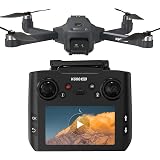
Multi-rotor drones, which include common quadcopters (four rotors), hexacopters (six rotors), and octocopters (eight rotors), are recognized for their agility and stability. These drones are excellent for tasks that demand meticulous control and high-quality data capture.
-
Detailed Mapping and Inspection: Their ability to hover precisely and maneuver in tight spaces makes them perfect for detailed farm mapping. High-resolution cameras attached to multi-rotor drones can capture incredibly sharp aerial imagery. These images are then processed to create accurate maps, elevation models, and 3D representations of farmland.
-
Monitoring Plant Health: Equipped with specialized sensors like multispectral or thermal cameras, multi-rotor drones can assess plant health by detecting variations in light reflectance or temperature. This allows for the early identification of stressed crops, irrigation issues, or nutrient deficiencies long before they are visible to the naked eye. Such early detection facilitates targeted interventions, minimizing crop loss.
-
Ease of Use: Generally, multi-rotor drones are easier to operate and maintain compared to their single-rotor counterparts, making them a popular choice for many agricultural operations seeking to adopt drone technology.
Fixed-Wing Drones: Covering Vast Landscapes
Fixed-wing drones resemble traditional airplanes, relying on wings for lift rather than rotors. Their design is optimized for sustained flight and covering extensive areas efficiently, making them the long-distance travelers of the agricultural drone world.
-
Extended Flight Times and Range: Fixed-wing drones are capable of staying airborne for much longer periods and covering significantly larger distances on a single battery charge compared to rotor-based drones. This endurance makes them ideal for surveying vast tracts of land, such as large open fields or expansive estates.
-
Large-Scale Data Acquisition: For farms spanning thousands of acres, comprehensive data collection would be a monumental task without fixed-wing drones. They can quickly acquire vast amounts of imagery and data, which is then used to create detailed aerial maps, topographical data, and even support environmental monitoring initiatives.
-
Efficiency for Broad Overviews: While multi-rotor drones excel in detail, fixed-wing drones are unmatched for providing broad overviews and initial assessments of large areas, helping to identify large-scale patterns or issues across the farm.
Hybrid VTOL Drones: The Best of Both Worlds
Hybrid Vertical Takeoff and Landing (VTOL) drones represent a sophisticated fusion of fixed-wing and multi-rotor capabilities. These innovative drones can take off and land vertically like a multi-rotor, but transition to forward flight using wings like a fixed-wing drone.
-
Versatility and Agility: The VTOL capability allows hybrid drones to operate effectively in confined spaces or on uneven terrain where traditional fixed-wing drones would struggle with takeoff and landing. Once airborne, they can transition to winged flight, offering the long endurance and speed characteristic of fixed-wing aircraft.
-
Adaptability for Complex Tasks: This combination of agility and endurance makes hybrid drones exceptionally versatile. They are suited for tasks that demand both precision for localized inspection and efficiency for covering medium to large areas. For instance, a hybrid drone could inspect a specific section of damaged crops with precision, then rapidly fly to a distant field for general surveying.
-
Advanced Payload Integration: Hybrid drones are typically designed to carry a wide range of advanced payloads, including high-resolution cameras, sophisticated multispectral sensors, LiDAR (Light Detection and Ranging) systems, and even compact spraying equipment. However, it is also important to note that these complex flight systems often require more specialized training for operators.
Beyond the Basics: Advanced Applications of Drones in Agriculture
The utility of agricultural drones extends far beyond basic mapping and spraying. Their integration into advanced farm management strategies is continually expanding, offering solutions for complex challenges.
-
Variable Rate Application (VRA): Drones equipped with multispectral sensors can generate Prescription Maps. These maps guide precision sprayers or spreaders, ensuring that inputs like fertilizer, water, or pesticides are applied only where and in the quantities needed, optimizing resource use and minimizing waste. This capability is a cornerstone of modern precision agriculture.
-
Irrigation Monitoring and Management: Thermal imagery captured by drones can identify areas of water stress in fields. By detecting differences in plant temperature, farmers can pinpoint leaky irrigation pipes or zones that are either over-irrigated or under-irrigated, leading to more efficient water usage and better crop health.
-
Livestock Monitoring: For large ranches, drones are being used to monitor livestock. They can track herds, check on individual animals for signs of distress or injury, and even assist in security against theft or predation. Thermal cameras are particularly useful for locating animals at night or in dense foliage.
-
Environmental Compliance and Security: Drones are used to monitor environmental conditions, track runoff, and ensure compliance with agricultural regulations. They can also provide aerial surveillance for farm security, detecting trespassers or identifying potential risks.
Choosing the Right Agricultural Drone for Your Needs
The decision of which drone type to integrate into your operations is a strategic one, influenced by several key factors. There is no one-size-fits-all solution; the ideal choice is dictated by the specific needs and characteristics of your farm.
-
Farm Size and Topography: For vast, open fields, the long endurance of a fixed-wing drone might be prioritized. Smaller, more intricate farms or those with varied terrain could benefit more from the agility of a multi-rotor or hybrid VTOL drone.
-
Primary Tasks: If your main requirement is heavy-duty crop spraying, a single-rotor drone is often the most efficient. For detailed plant health analysis and mapping smaller plots, a multi-rotor drone could be more appropriate. For broad surveying and comprehensive data collection over large areas, fixed-wing drones excel.
-
Budget and Maintenance: The initial investment varies significantly between drone types, as does the cost of maintenance and specialized training. Simpler multi-rotor drones are often more budget-friendly and easier to maintain for beginners, while advanced hybrid systems represent a more substantial investment.
-
Regulatory Compliance: Drone operations are governed by local and national regulations. The complexity of these regulations can vary depending on the drone’s size, weight, and intended use. Understanding these rules is critical before making a purchase.
-
Operator Skill and Training: While multi-rotor drones are generally easier to fly, operating more complex systems like single-rotor or hybrid VTOL drones requires specialized training and certification. Investing in proper training for your team is just as important as the drone itself.
Considering all these aspects, a solution such as a DJI thermal drone, often an advanced quadcopter, becomes particularly appealing for many agricultural operations. These multi-rotor drones are robust enough for tasks like precision spraying, accurate field mapping, and detailed inspections critical for precision agriculture. They offer a balanced approach, suitable for optimizing crop health and significantly improving overall operational efficiency.
Embracing the potential of drones in agriculture is not merely about adopting new technology; it is about adding new dimensions to farm management. It is a strategic move that can lead to increased yields, reduced costs, and a more sustainable future for agricultural businesses, effectively adding wings to agricultural production.
Cultivating Clarity: Your Agricultural Drone Questions Answered
What are agricultural drones?
Agricultural drones are unmanned aerial vehicles (UAVs) used in farming to help with tasks like crop spraying, mapping fields, and monitoring plant health. They use technology to make farming more precise and efficient.
How do drones help farmers?
Drones help farmers by reducing manual labor, applying resources like water and pesticides more precisely, and collecting detailed data about crop health. This allows farmers to make faster, more informed decisions to protect their yields.
What are the main types of agricultural drones?
The article describes four main types: single-rotor, multi-rotor, fixed-wing, and hybrid VTOL drones. Each type has specific designs tailored for different farming tasks.
What is a multi-rotor drone good for?
Multi-rotor drones are known for their agility and stability, making them excellent for detailed farm mapping, monitoring plant health with specialized sensors, and are generally easy to operate.
When would a farmer use a fixed-wing drone?
Farmers would use fixed-wing drones for surveying vast areas because these drones can stay airborne for longer periods and cover significantly larger distances compared to rotor-based drones.