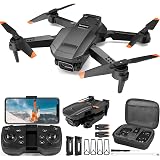
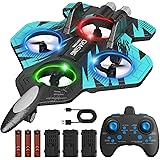
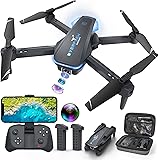
For many enthusiasts of remote-controlled aircraft, the initial foray into the hobby often includes a challenging experience with RC helicopters. These sophisticated machines, while impressive to behold, are widely recognized for their steep learning curve, demanding considerable skill and practice to master. As was observed in the accompanying video, the difficulty associated with piloting single-rotor RC helicopters can lead to frequent crashes and, ultimately, a discontinuation of the hobby for some. This stark contrast in ease of use becomes particularly apparent when comparing traditional RC helicopters to their multi-rotor drone counterparts.
The journey from struggling with an RC helicopter to confidently operating a drone for recreational or even commercial purposes is largely defined by advancements in flight control technology. Unlike the intricate mechanical linkages and precise stick inputs required for a single-rotor aircraft, modern multi-rotor drones have been engineered with sophisticated stabilization systems that fundamentally alter the piloting experience. These systems play a crucial role in making drones accessible to a much wider audience.
The Fundamental Difference: Stability in Multi-Rotor Drones
The core advantage of multi-rotor drones lies in their inherent stability, which is primarily attributed to their design and advanced onboard electronics. Traditional RC helicopters rely on a complex main rotor and a tail rotor to maintain lift, direction, and yaw control. Every subtle adjustment by the pilot requires precise coordination across multiple controls, making steady flight a constant battle against gravity and aerodynamics.
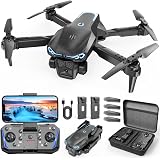
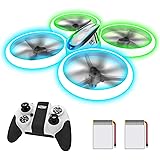
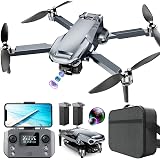
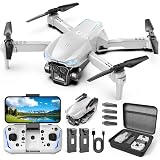
In contrast, a multi-rotor drone, such as a quadcopter or hexacopter, utilizes multiple propellers that can individually vary their thrust. This allows for differential thrust to be precisely managed by an onboard flight controller. Integrated gyroscopes and accelerometers continuously monitor the drone’s orientation and movement, making thousands of micro-adjustments per second to keep the aircraft level and stable. This autonomous stabilization greatly reduces the cognitive load on the pilot.
Advanced Flight Control Systems and Pilot Assistance
Modern commercial multi-rotor drones, like those produced by DJI and other leading manufacturers, often come equipped with a range of advanced flight modes designed to assist pilots. The “stabilized mode,” often the default, exemplifies this. In this mode, if the pilot releases the control sticks, the drone does not simply drift or plummet; instead, it is designed to hold its position and altitude, essentially hovering in place and waiting for further input.
This “hands-off” capability is invaluable, especially for newer pilots or those operating in complex environments. It provides crucial time for the pilot to assess their surroundings, plan their next maneuver, or simply recover from a moment of panic. The possibility of the drone heading full speed towards an obstacle without constant intervention is significantly reduced. This inherent stability creates a much more forgiving learning environment compared to the relentless demands of a single-rotor helicopter.
Pilot Skill, Risk, and Drone Insurance
A pertinent question that often arises, particularly for individuals considering commercial drone operations, is how pilot skill affects insurance premiums. As was discussed, it might be assumed that an insurance company would meticulously assess a pilot’s experience and track record before underwriting a policy for an expensive inspection drone or other commercial UAV. However, the reality is often quite different.
It is generally observed that insurance providers for commercial drone operations do not typically delve deeply into an individual pilot’s flight hours or specific certifications beyond standard regulatory requirements. While pilot proficiency is undoubtedly a factor in preventing accidents, the insurance industry often bases its risk assessments on broader actuarial data related to drone models, operational environments, and the overall safety record of commercial drone flights. This means that a history of crashing RC helicopters, while perhaps personally discouraging, is not usually a direct impediment to securing drone insurance.
Building Confidence with Multi-Rotors for Professional Applications
The accessibility of multi-rotor drones has opened up numerous avenues for commercial use, from aerial photography and videography to intricate industrial inspections and mapping. The simplified piloting experience facilitated by advanced flight controllers means that the barrier to entry for professional drone operation is lower than ever before. This does not diminish the importance of proper training and understanding regulations, but it does shift the focus from purely mechanical flight control to mission planning, data acquisition, and adherence to safety protocols.
Individuals transitioning from hobbyist endeavors, or those new to aerial platforms entirely, are often more easily introduced to drone operations via multi-rotor systems. Their stable flight characteristics allow pilots to focus on the task at hand – whether it’s framing a shot or inspecting a specific structure – rather than being solely preoccupied with keeping the drone airborne. This foundational ease of control is a significant reason why multi-rotor drones have become the workhorses of the modern aerial industry.
Unspinning the Debate: Your Multi-Rotor Questions Answered
What is the main difference between multi-rotor drones and traditional RC helicopters for new pilots?
Multi-rotor drones are significantly easier for new pilots to fly than traditional RC helicopters because they have advanced stabilization systems and features that simplify control.
Why are multi-rotor drones more stable than single-rotor RC helicopters?
Multi-rotor drones achieve stability through multiple propellers that can individually vary thrust, controlled by an onboard flight controller that uses gyroscopes and accelerometers to make constant, tiny adjustments.
What does ‘stabilized mode’ or ‘auto-hover’ mean on a multi-rotor drone?
In stabilized mode, if a pilot lets go of the control sticks, the multi-rotor drone will automatically hold its position and altitude, essentially hovering in place. This gives new pilots time to assess their surroundings or plan their next move.
How do multi-rotor drones help beginners learn to fly?
Their inherent stability and automated flight controls, like auto-hover, reduce the demand on the pilot, creating a much more forgiving learning environment compared to the constant input required for RC helicopters.