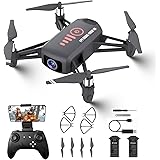
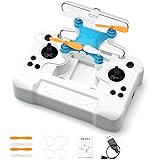
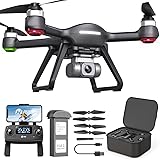
The successful operation of an Unmanned Aerial Vehicle (UAV) is predicated upon a robust and reliable communication link between the drone and its remote controller. While the visual demonstration provided above effectively illustrates the immediate sequence for initiating a connection, a comprehensive understanding of the underlying technical principles governing drone remote controller pairing is often sought by professionals and advanced enthusiasts alike. This intricate process transcends mere button presses; it involves sophisticated radio frequency (RF) protocols and rigorous system checks to ensure flight stability and data integrity.
The establishment of this critical radio control (RC) link is foundational for all subsequent flight operations. Without a precisely calibrated and securely paired system, the drone’s responsiveness, control range, and emergency protocols, such as failsafe activations, cannot be guaranteed. Consequently, a deep dive into the mechanisms that facilitate this connection is essential for optimizing UAV performance and ensuring operational safety.
Understanding the Criticality of Drone-Remote Controller Pairing
The initial binding procedure, often signified by distinct electronic beeps from both the remote and the drone as heard in the accompanying video, represents the crucial first step in any UAV deployment. This process involves the controller transmitting a unique identification code, which the drone’s receiver then registers and locks onto. Subsequently, all command signals from that specific controller are recognized and acted upon by the drone, ensuring an exclusive and secure channel.
A stable RC link is not merely a convenience; it is a paramount safety requirement. Industry statistics indicate that a significant percentage of flyaways and incidents are directly attributable to poor signal integrity or improper pairing procedures. Furthermore, in commercial applications, where drone flights may involve complex missions or valuable payloads, the financial and reputational implications of a lost connection can be substantial.
The Underlying Principles of UAV Communication Protocols
Modern drone communication systems predominantly operate within unlicensed industrial, scientific, and medical (ISM) radio bands, most notably the 2.4 GHz and 5.8 GHz frequencies. The efficacy and resilience of the drone remote controller pairing are heavily dependent on the chosen spread spectrum technology, which is designed to mitigate interference and enhance signal robustness. Two primary methods are widely employed: Direct Sequence Spread Spectrum (DSSS) and Frequency Hopping Spread Spectrum (FHSS).
DSSS operates by spreading a radio signal over a wider frequency band than necessary, making it more resistant to narrow-band interference and more difficult to intercept. Each data bit is encoded with a higher-rate bit sequence (chip code), which allows the receiver to reconstruct the original data even if portions of the signal are corrupted. Conversely, FHSS involves the rapid switching of carrier frequencies during transmission, following a pseudorandom sequence known only to the paired devices. This dynamic frequency allocation significantly reduces the likelihood of sustained interference from other RF sources, as the system continually hops away from congested channels.
Common Frequency Bands and Their Implications
The selection of operating frequency for RC systems carries distinct advantages and disadvantages, profoundly impacting the potential control range, latency, and susceptibility to environmental factors. The 2.4 GHz band, utilized by approximately 80% of consumer drones, offers a greater theoretical range due to its superior penetration capabilities through obstacles like trees or buildings. However, this band is also highly congested, shared with Wi-Fi networks, Bluetooth devices, and microwaves, leading to increased potential for signal interference.
In contrast, the 5.8 GHz band provides higher data throughput and typically less congestion, resulting in lower latency and a cleaner signal, which is particularly beneficial for high-definition video transmission (FPV). However, its shorter wavelength means it is more susceptible to signal degradation from physical obstructions and generally offers a reduced range compared to 2.4 GHz. Regulatory bodies, such as the Federal Communications Commission (FCC) in the United States and the CE marking in Europe, dictate power output limits and specific usage guidelines for these bands, which must be strictly adhered to during RC system operation.
The Standard Process for Pairing a Drone with its Remote Controller
While the exact sequence for pairing a drone with its remote controller may vary slightly across manufacturers and drone models, a generalized protocol is commonly observed. Typically, the process begins with powering on the drone and the remote controller independently. The drone’s status indicator, often an LED light, will usually enter a flashing mode, indicating it is awaiting a connection or a binding signal. Simultaneously, the remote controller is put into a “bind” or “pair” mode, which might involve pressing a specific button or holding down multiple buttons during power-up.
Upon activation of the bind mode, the remote controller transmits its unique ID across the specified RF spectrum. The drone’s receiver, in its listening state, detects this signal and initiates a handshake protocol. The audible beeps observed in the video likely signify the successful reception of the ID by the drone and the subsequent confirmation by the remote. Once the binding is complete, the drone’s status indicator will typically transition to a solid light, confirming a stable and secure RC link has been established, thereby allowing the transmission of control commands and telemetry data.
Ensuring a Secure and Reliable RC Link
To optimize the reliability of the RC link, several best practices are routinely implemented. Proper antenna orientation on both the drone and the remote controller is paramount; antennas should generally be positioned perpendicular to each other to maximize signal reception, minimizing signal dropout caused by polarization mismatch. Furthermore, operators are advised to maintain a clear line of sight between the drone and the remote whenever possible, as environmental factors such as dense foliage, concrete structures, or high-voltage power lines can significantly attenuate RF signals. Empirical studies on drone communication reliability suggest that maintaining optimal antenna positioning can reduce signal loss by as much as 15% in challenging RF environments.
Troubleshooting Common Drone Remote Pairing Issues
Despite adherence to manufacturer guidelines, operators may occasionally encounter difficulties when attempting to pair a drone with its remote controller. Common issues often stem from several factors, including RF interference from other electronic devices, outdated firmware on either the drone or the controller, excessive distance during the binding process, or even physical damage to antennas or internal RF modules. A systematic diagnostic approach is recommended to resolve these complications efficiently.
Initial troubleshooting steps should include:
- Power Cycling: Turning off and then restarting both the drone and the remote controller.
- Firmware Verification: Ensuring that the latest firmware versions are installed on both devices, as updates frequently include connectivity improvements and bug fixes.
- Environmental Scan: Moving to an area with less RF interference, away from Wi-Fi routers, cellular towers, and other drones.
- Proximity Check: Attempting the pairing process with the drone and remote controller in close physical proximity, typically within one meter.
- Antenna Inspection: Visually inspecting antennas on both devices for any signs of damage or improper attachment.
- Re-binding: Performing a full re-binding procedure as per the manufacturer’s instructions, which may sometimes involve factory resetting one or both devices.
If these basic steps do not resolve the issue, further investigation into specific error codes or manufacturer support channels may be required. Persistent connectivity problems might indicate a hardware malfunction necessitating professional repair or replacement of components.
Advanced Telemetry and Failsafe Mechanisms in RC Systems
Beyond basic control commands, modern drone-remote systems facilitate the exchange of telemetry data, providing operators with real-time feedback on critical flight parameters such as battery voltage, GPS coordinates, altitude, speed, and signal strength. This bidirectional communication is vital for informed decision-making during flight and serves as an early warning system for potential issues. The precision with which this data is transmitted and interpreted significantly enhances operational safety and efficiency.
A crucial safety feature integrated into these communication systems is the failsafe mechanism. In the event of an RC link loss—for example, due to the drone flying out of range or severe interference—the drone’s failsafe protocols are automatically triggered. These protocols dictate predefined actions, such as returning to the launch point (Return-To-Home or RTH), landing automatically at the current location, or simply hovering. Statistical analysis reveals that well-implemented failsafe systems significantly reduce the incidence of drone loss, with a reported recovery rate exceeding 90% for drones that successfully initiate RTH procedures upon signal loss. Therefore, proper drone remote controller pairing is not just about control, but also about the integrity of these vital safety features.
Ready for Takeoff: Your Drone Pairing Questions Answered
What is drone remote controller pairing?
Drone remote controller pairing is the process of establishing a secure wireless connection between your drone and its remote control. This connection allows the remote to send commands to the drone, enabling you to fly it.
Why is it important to properly pair my drone and remote controller?
Proper pairing is crucial for safe and reliable drone operation. It ensures that your drone receives commands correctly, maintains flight stability, and can activate important safety features like return-to-home if the signal is lost.
How do I generally pair my drone with its remote controller?
Typically, you power on both the drone and the remote controller independently. The remote controller is then put into a specific ‘bind’ or ‘pair’ mode, which allows the drone to detect its unique signal and establish a connection.
What should I do if my drone and remote controller won’t pair?
You should first try power cycling both devices (turning them off and on). Also, ensure both have the latest software updates and attempt pairing in an open area away from other electronic interference, keeping the devices close to each other.