Thinking about elevating your RC airplane hobby to autonomous flight? The world of fixed-wing drone electronics might seem vast. This companion guide expands on the video above. We will demystify the core components. You will gain a clear understanding of each part. This includes their function, installation, and configuration. Let’s delve into the brains and senses of your future autonomous aircraft.
From RC Aircraft to Autonomous Fixed-Wing Drone
A basic RC airplane offers manual control. It typically uses a four-channel setup. This means one motor propels it forward. Ailerons manage roll. An elevator controls pitch. The rudder directs yaw. These simple mechanics give pilots full manual command. However, autonomous flight demands more. It requires additional sophisticated components. These parts work together like a symphony orchestra. They transform a simple aircraft into a smart drone.
To achieve autonomous capabilities, key components are added. A flight controller becomes the central nervous system. A GPS module provides essential navigational data. These additions unlock new possibilities. They allow for pre-programmed flight paths. They also enable stable, independent operation. Many hobbyists enjoy this transition. It opens doors to advanced drone applications. Consider your RC plane evolving. It gains its own sense of direction.
Beyond the core components, many sensors exist. They add specialized functions. For instance, obstacle detection enhances safety. Precise landing aids can guide the drone. These extra features cater to specific tasks. The initial step is understanding the fundamentals. We build knowledge layer by layer. This structured approach simplifies complex topics. It prepares you for more advanced systems.
The Flight Controller: The Drone’s Brain
What exactly is a flight controller (FC)? It is an electronic device. It manages all aspects of a drone’s flight. Imagine it as a tiny conductor. This conductor ensures stability. It also controls maneuvers precisely. The FC collects data from many sensors. It analyzes this information in real-time. Then, it sends control signals to the motor and servos. This constant feedback loop maintains steady flight.
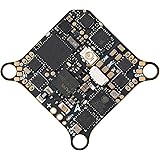
A flight controller is essentially a printed circuit board (PCB). This board houses several key components. At its heart lies the microcontroller (MCU). The MCU is the brain of the FC. It processes all incoming sensor data. It then calculates the necessary output signals. Modern FCs often use STM32 microcontrollers. These are made by STMicroelectronics. They are known for real-time processing power. They are perfect for fast-moving drones.
STM32 microcontrollers come in various series. The F4, F7, and H7 are common examples. Each series offers different performance levels. An F4, for example, features a Cortex M4 processor. It can reach clock speeds up to 180MHz. It has up to 1MB of flash memory. It also includes up to 256KB of RAM. An F7 steps up to a Cortex M7 processor. Its clock speed can hit 216MHz. It provides up to 2MB of flash and 512KB of RAM. For high-end applications, the H7 series combines M4 and M7 cores. It boasts speeds up to 550MHz. It has 2MB+ flash and 1MB+ RAM. While F4s are budget-friendly, newer models offer better future-proofing.
Built-In Sensors and Modules
Flight controllers integrate several critical sensors. These sensors provide vital flight data. Accelerometers measure linear acceleration. They work along three axes. This helps determine the drone’s orientation. They also detect the effect of gravity. This input allows the FC to calculate pitch and roll angles. For example, in level flight, gravity acts mostly on the Z-axis. When tilted, this force distributes across all axes. The accelerometer can sense this shift.
Gyroscopes are another crucial sensor. They measure angular velocity. They track how quickly the drone rotates. This occurs around its three axes. Gyroscopes are excellent for detecting rapid changes. However, they cannot detect sustained inclination alone. Combining accelerometers and gyroscopes is key. This pair forms an Inertial Measurement Unit (IMU). The IMU provides a complete picture. It offers continuous spatial orientation and motion data. Think of them as the drone’s inner ear. They constantly sense movement and position.
Barometers are also common. They measure atmospheric pressure. This measurement helps determine altitude. A blackbox module is often included too. This memory stores flight logs. It captures various parameters. It can be built-in or use a micro SD card. This data is invaluable for analysis. It helps in post-flight diagnostics. Voltage regulators are also present. They stabilize battery voltage. They then distribute power to servos and other components. These ensure a steady power supply for all parts.
Essential External Modules for Fixed-Wing Drone Electronics
Beyond the FC’s internal components, external modules connect to it. These extend the drone’s capabilities. A GPS module is fundamental. It is essential for navigation. It enables autonomous functions. For example, waypoint-based flights become possible. The GPS provides precise positional data. This allows the drone to maintain its course. It can then complete automated flight paths. Consider it the drone’s reliable navigator.
A compass, or magnetometer, often pairs with GPS. It determines the aircraft’s magnetic heading. This sensor is often integrated into the GPS module itself. However, standalone units are also available. This combination gives the drone its sense of direction. Without it, the drone might wander. It is crucial for accurate navigation. Think of it as the drone’s personal compass.
For live video streaming, FPV cameras and VTXs are popular. FPV stands for First Person View. A Video Transmitter (VTX) sends the camera feed. This feed goes to goggles or a monitor. Both analog and digital systems exist. Digital systems have become more popular. They offer better performance and range. Their costs have also decreased. These modules connect to the FC. They provide the pilot’s “eyes” in the sky.
Analog OSD (On-Screen Display) overlays flight data. This data appears directly on the FPV feed. It shows parameters like speed or altitude. Most FCs have a built-in OSD for analog systems. Digital systems integrate OSD data differently. They send it directly from the VTX to the receiver. Thus, they do not need a separate OSD module. The OSD acts like a heads-up display. It provides crucial information at a glance.
Advanced Sensors for Enhanced Flight
Fixed-wing aircraft often benefit from additional sensors. An airspeed sensor, typically with a pitot tube, measures airspeed. While GPS can estimate ground speed, an airspeed sensor provides more precise data. This is especially useful for maintaining optimal flight conditions. It helps with stall prevention and efficient cruising. Think of it as a speedometer for the air, not the ground.
LIDAR modules measure distances using laser light. They offer high accuracy over short ranges. LIDAR can be used for obstacle detection. It also provides precise altitude measurements above ground. This is vital for autonomous landings. It gives the drone a clear sense of its immediate surroundings. Imagine it as a very precise laser rangefinder.
Many other specialized sensors exist. These are often used in commercial applications. Vision cameras provide detailed visual data. Thermal cameras detect heat signatures. Sonars can measure distances underwater or in air. Air quality sensors detect environmental conditions. Redundant GPS or barometers increase reliability. These sensors customize the UAV. They allow it to perform specific tasks. The choice depends on the mission requirements. They transform a basic drone into a versatile tool.
Communication Interfaces: How Components Talk
Understanding communication interfaces is essential. These allow different components to speak with the flight controller. You will encounter these terms frequently. UART (Universal Asynchronous Receiver-Transmitter) is a common serial interface. It allows bidirectional data transfer. GPS modules often connect via UART. Telemetry systems and RC receivers also use it. Most FCs have multiple UART ports. This supports several devices simultaneously.
I²C (Inter-Integrated Circuit) is another protocol. It allows multiple devices to share the same bus. This is ideal for low-bandwidth sensors. Examples include compasses and barometers. Digital airspeed sensors also use I²C. It simplifies wiring for these devices. It’s like a party line for several sensors.
CAN bus (Controller Area Network) offers high-speed communication. It enables real-time data exchange. This occurs between multiple devices. ESCs, GPS, compasses, and LIDAR can use CAN. Servos and receivers can also connect. CAN offers faster and more reliable data. However, it’s typically found in high-end setups. Not all basic FCs support it. It’s akin to a dedicated high-speed data highway.
SPI (Serial Peripheral Interface) is a fast interface. It connects onboard sensors. Gyroscopes and accelerometers often use SPI. It also manages memory like flash modules. SD cards and OSD modules use it too. SPI ensures quick data exchange. This is vital for real-time sensor readings.
ADC (Analog-to-Digital Converter) transforms analog signals. It converts them into digital data. This is used for monitoring battery voltage. It also measures current draw. Telemetry signal strength (RSSI) uses ADC. Analog airspeed sensors connect this way. It translates real-world signals for the digital brain.
USB (Universal Serial Bus) is a standard interface. It connects the FC to a computer. This is essential for firmware updates. Initial configuration and parameter adjustments use USB. It’s the primary way to talk directly to the FC. Wi-Fi and Bluetooth offer wireless connectivity. They allow remote configuration. You can adjust parameters via a computer or mobile app. This provides convenience for field adjustments.
Control Output Protocols: Speaking to Motors and Servos
Flight controllers also communicate outward. They send signals to motors and servos. PWM (Pulse-Width Modulation) is a classic protocol. It uses a pulsed analog signal. The pulse width encodes information. This controls servos directly. It also adjusts motor speed through ESCs. PWM has been a long-standing standard.
DShot is a newer, digital protocol. It offers faster and more precise communication. DShot connects directly to ESCs. It also supports telemetry data. This includes reporting RPM and temperature. DShot is becoming increasingly popular. It offers benefits over traditional PWM. Think of DShot as a clearer, faster digital command line.
Types of Flight Controllers: Copter or Wing?
The market offers various flight controllers. Some are designed for copters. Others are made for fixed-wing aircraft. While some flexibility exists, optimization is key. Choosing an FC designed for fixed-wing use is best. These FCs have specific features. They cater to the needs of airplanes.
Fixed-wing FCs often include a Power Distribution Board (PDB). This distributes power effectively. It connects separate Electronic Speed Controllers (ESCs). They also feature a servo rail. This rail has outputs for connecting servos. It includes a built-in 5-volt voltage stabilizer. This makes servo connections seamless and reliable. Their form factor is typically rectangular. This suits the elongated nature of aircraft.
Copter FCs are different. They often require a separate board. This board includes built-in ESCs. It also handles power distribution. They usually lack a dedicated servo rail. Their shape is typically square. They fit standard drone frames. Common sizes include 30.5×30.5mm, 20x20mm, or 25.5×25.5mm. These dimensions suit multirotor designs.
Many FCs are bare boards. They require soldering for connections. They often lack protective enclosures. Controllers like CubePilot or Pixhawk offer alternatives. These are enclosed, pre-assembled units. They require no soldering. They are often plug-and-play. They work very well for fixed-wing aircraft. However, they are significantly more expensive. They are common in professional platforms. For basic setups, cheaper FCs offer similar performance.
Flight Controller Firmware: The Operating System
Firmware dictates an FC’s functionality. It is like the operating system. Popular options include ArduPilot, iNav, and Betaflight. Each offers distinct advantages. The choice depends on your specific needs. Understanding their differences is important.
ArduPilot is a robust firmware. Both hobbyists and professionals use it. It supports various fixed-wing configurations. It also works for copters and other vehicles. ArduPilot offers advanced autonomous features. This includes auto take-off and landing. It’s trusted worldwide for precision and reliability. Its extensive features can be challenging for beginners. However, it’s ideal for autonomous and FPV operations.
Betaflight is primarily for FPV copters. It is optimized for manual flying. Drone racing benefits greatly from Betaflight. It has easy configuration tools. Flight parameter tuning is intuitive. Its versatility is limited. It is not designed for fixed-wing aircraft. Its autonomous capabilities are minimal. Betaflight suits FPV racing and acrobatics best.
iNav offers a middle ground. It supports both copters and fixed-wings. It features a user-friendly interface. This interface is similar to Betaflight. It simplifies the setup process. However, iNav has less advanced features. It does not match ArduPilot’s functionality. Fixed-wing features are still under development. It can sometimes have stability issues. iNav is best for beginners. It suits simpler requirements and FPV flights.
For most fixed-wing applications, ArduPilot is the optimal choice. Its versatility and reliability are unmatched. It is widely adopted by drone enthusiasts. Professionals also favor ArduPilot. This firmware provides comprehensive control. It allows for complex autonomous missions. It will be the focus for future installations. We plan to detail its setup and configuration.
Ground Control Station Software
A ground control station (GCS) is vital. It works with the flight controller. This can be a computer or mobile device. It uses an appropriate application. Mission Planner is a popular GCS. It offers full functionality. It is available for Windows and Mac OS. Mission Planner connects to your FC. It configures parameters and settings. You can plan flight missions. It monitors real-time flight data. You can even control the drone directly. This requires a telemetry radio. Mission Planner is the most popular solution.
QGroundControl is another option. It is compatible with computers and mobile devices. Its functionality is somewhat limited. It doesn’t offer as many features as Mission Planner. However, it is user-friendly. There are no obstacles to using it. For this series, we will focus on Mission Planner. It provides a comprehensive experience. It is a powerful tool for fixed-wing drone electronics configuration.
Understanding these core electronic principles is crucial. It sets the stage for building your own fixed-wing drone. This journey involves selecting the right components. It includes careful assembly and calibration. This guide is your stepping stone. It prepares you for the exciting process. We will detail each step in future episodes. This will include soldering and component connections. We will also cover firmware uploads and initial parameter setup. The world of autonomous fixed-wing drone electronics awaits your exploration.
From Basics to Blue Skies: Your Fixed-Wing Drone Q&A
What is the main difference between an RC airplane and an autonomous fixed-wing drone?
An RC airplane is typically controlled manually by a pilot, while an autonomous fixed-wing drone includes extra components like a flight controller and GPS to fly independently on pre-programmed paths.
What is a flight controller and what is its primary role in a drone?
A flight controller (FC) is the ‘brain’ of the drone. It’s an electronic device that gathers data from sensors, processes it in real-time, and sends control signals to manage the drone’s stability and maneuvers during flight.
What are some essential sensors a fixed-wing drone uses for autonomous flight?
Essential sensors include accelerometers and gyroscopes (which form an IMU) for detecting orientation and movement, a barometer for measuring altitude, and a GPS module for navigation and enabling automated flight paths.
What is flight controller firmware and why is it important?
Firmware is like the operating system for the flight controller; it’s the software that tells the FC how to function. It enables all the features, from flight stabilization to autonomous capabilities, and dictates how the drone behaves.
What is Ground Control Station (GCS) software used for?
Ground Control Station (GCS) software, such as Mission Planner, is used on a computer or mobile device to communicate with the drone’s flight controller. It allows you to configure settings, plan complex flight missions, and monitor real-time flight data.