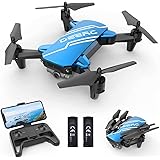
As covered in the insightful video above, understanding the intricate mechanics of your drone, or Remotely Piloted Aircraft System (RPAS), is not just a technical curiosity—it’s a critical safety measure and often a regulatory expectation. For instance, Transport Canada specifically mandates that drone pilots possess a comprehensive understanding of RPAS systems to ensure safe operations. This deep dive into how drones work empowers pilots to prevent common issues, troubleshoot problems effectively, and maintain peak performance. Let’s unpack the core components and systems that transform a collection of parts into a sophisticated flying machine.
Deconstructing the RPAS: Fundamental Terminology
Before exploring the operational specifics, it’s essential to clarify the terminology used within the drone community and by regulatory bodies. In many regions, including Canada, your drone is officially termed a Remotely Piloted Aircraft (RPA). A ‘small RPA’ (sRPA) denotes lighter, typically sub-25kg, aircraft. The handheld device you use to pilot your drone is referred to as the Ground Control Station (GCS). This GCS communicates with the RPA via a Command and Control (C2) radio link. The entire setup—comprising the RPA, GCS, and C2 link—is collectively known as a Remotely Piloted Aircraft System (RPAS).
1. The Ground Control Station (GCS) and Its Crucial Role
The GCS is more than just a controller; it’s your primary interface with the drone. Typically, it integrates a smartphone or tablet running flight software with a control unit featuring joysticks, buttons, and radio gear. The antennae on the GCS are vital for establishing and maintaining communication with the drone.
One of the most critical aspects of GCS operation, often overlooked, is software compatibility. All components of your RPAS—the phone/tablet, the control unit, the drone itself, and sometimes even the smart batteries—must run compatible software versions. A mismatch can lead to unexpected behavior, system glitches, or even catastrophic failure. Always prioritize software updates directly from your drone manufacturer, ensuring all associated components are updated simultaneously to prevent compatibility conflicts.
2. The Command and Control (C2) Radio Link: Maintaining Connection
The C2 link is the digital lifeline between your GCS and the RPA, transmitting commands to the drone and receiving telemetry, video feeds, and status updates in return. While this link can range from standard Wi-Fi to more advanced proprietary systems like DJI’s OcuSync, its reliability hinges on a clear radio line of sight.
Radio line of sight isn’t always identical to visual line of sight. It’s significantly affected by the Fresnel Zone, an elliptical area around the radio signal path where obstacles can degrade signal quality, even without direct obstruction. Signal strength diminishes with distance and can be severely impacted by various forms of interference. Buildings, hills, dense vegetation, water bodies, and even ambient radio frequency noise from Wi-Fi networks, cell towers, and power lines can cause degradation. Advanced systems, such as OcuSync, actively monitor signal quality and switch channels to optimize the connection, highlighting the importance of robust C2 technology for safe drone operations.
Despite technological advancements, C2 link loss is an eventual reality for every pilot. Proactive measures are key: orienting your antennae correctly (flat face towards the drone), moving closer to the drone, or eliminating physical obstructions. In the event of a persistent loss, rebooting the controller can sometimes re-establish the connection. Critically, ensure your drone’s Return To Home (RTH) feature is enabled and configured with an appropriate return height to clear obstacles in the flight path, particularly when operating near tall structures or in changing environments like from a moving boat, where RTH could otherwise lead to unintended landings in water.
3. The Drone’s Transceiver and the Flight Controller: The Brains of the Operation
Onboard the drone, a corresponding transceiver and antenna subsystem receive commands and transmit vital information back to the GCS. This module is directly connected to the flight controller, the sophisticated “brain” of the drone. The flight controller’s primary role is to interpret pilot commands and translate them into precise motor adjustments, compensating for environmental factors like wind gusts. Furthermore, it manages obstacle avoidance systems, monitors battery conditions, handles camera and gimbal positioning, and streams the live image feed to the pilot.
The complexity of these functions means that while some drones consolidate these tasks into a single chip, others distribute them across multiple sub-controllers. This modularity ensures redundancy and specialized processing, allowing for more advanced features and greater reliability in modern drone designs.
4. Position Sensors: Knowing Where You Are in 3D Space
For the flight controller to execute commands accurately, it requires precise information about the drone’s position, orientation, and velocity. This data is continuously fed by an array of sensors:
-
Global Navigation Satellite Systems (GNSS): More than just GPS, this umbrella term includes systems like Russia’s GLONASS and Europe’s Galileo. GNSS modules calculate the drone’s latitude and longitude by triangulating signals from orbiting satellites. Signal accuracy is directly proportional to the number of satellites locked onto. Consequently, performance can degrade in urban canyons with tall buildings or narrow mountain valleys where sky visibility is limited, or during strong geomagnetic storms that distort satellite signals.
-
Magnetometer (Compass): This sensor detects the Earth’s magnetic field to determine the drone’s heading relative to magnetic North. It’s crucial to remember that magnetic North deviates from true North, and this “magnetic declination” varies geographically. For example, Toronto exhibits approximately a -10 degree declination, while Montreal, a mere 500 kilometers away, shows -14 degrees. This geographical variance explains why drones often require compass recalibration when moving to a new location. Compass accuracy can also be influenced by local magnetic interference from power lines, metal structures, or even the drone’s own frame, underscoring the importance of proper calibration away from such influences.
-
Altimeter: Using barometric air pressure readings, the altimeter determines the drone’s height relative to its launch site. This differential pressure measurement provides a critical vertical dimension to the drone’s spatial awareness.
The combined input from GNSS, the compass, and the altimeter provides a solid foundation for the drone’s general location and orientation. However, for the characteristic rock-steady hovering and fine-tuned movements, another critical sensor comes into play.
5. The Inertial Measurement Unit (IMU): The Foundation of Stability
The IMU is arguably the unsung hero of drone stability. It provides the flight controller with real-time, fine-grained details about the drone’s movement in three-dimensional space, including its speed and direction. Modern IMUs typically integrate microscopic accelerometers and gyroscopes to detect minute changes in linear acceleration and angular velocity across multiple axes (yaw, pitch, and roll) hundreds of times per second.
This constant stream of data allows the flight controller to make instantaneous adjustments, maintaining precise control and stability. However, the IMU’s sensitivity is also its vulnerability. Even slight inaccuracies in its sensors can lead to “drift,” causing the IMU to become disoriented over time. Regular calibration, as suggested by the system or periodically (e.g., once a year, or if the drone exhibits unusual drifting or horizon issues), is paramount. While not necessary before every flight, timely recalibration ensures the IMU accurately informs the flight controller, preserving your drone’s smooth and predictable flight characteristics.
6. Electronic Speed Controllers (ESCs) and Brushless Motors: Powering Flight
Based on all the sensor data and pilot commands, the flight controller instructs the Electronic Speed Controllers (ESCs). Each motor has its dedicated ESC, which is responsible for delivering the precise current and voltage from the battery to ensure the motor rotates at the correct RPM. This precision is vital for controlled flight maneuvers and stability.
Drone motors are a marvel of engineering, distinct from conventional brushed motors. They are almost universally brushless, typically employing an outrunner design where the outer casing, with its magnets, spins around a fixed inner stator coil. This design eliminates the friction-generating brushes found in older motor types, resulting in significantly higher efficiency, better performance, and greater durability. Brushless motors, while more expensive, are essential for the power and responsiveness required for stable drone flight. Given their exposed nature, it’s critical to keep them free from dirt, grime, and especially moisture, as water ingress can quickly lead to corrosion and failure.
7. Propellers: The Aerodynamic Workhorses
Attached to the spinning outer part of the brushless outrunner motors, propellers are the components that generate lift and thrust. On quadcopters, propellers are arranged in counter-rotating pairs (two clockwise, two counter-clockwise) to cancel out torque, preventing the drone from simply spinning uncontrollably. The flight controller meticulously varies the RPMs of individual propellers to achieve different maneuvers—increasing speed on one side for a turn, or uniformly increasing all for ascent.
Despite their apparent simplicity, propellers are arguably the most critical yet cheapest replaceable part of your drone. Any damage—chips, cracks, or deformation—can lead to severe vibrations, reduced efficiency, or even catastrophic failure in flight. Always inspect propellers meticulously before and after every flight and replace any damaged ones immediately, ensuring you match the correct rotation direction for optimal performance and safety.
8. Batteries: The Lifeblood of Flight
The vast majority of modern drones rely on Lithium Polymer (LiPo) batteries, though some smaller models, like the original DJI Mavic Mini, use Lithium-ion (Li-ion). LiPo batteries are favored for their excellent energy-to-weight ratio and high discharge rates, providing the substantial “oomph” needed to power multiple motors simultaneously. These batteries are often configured in series (e.g., 2S, 4S), indicating the number of cells connected, with each cell nominally providing 3.7 volts, peaking at 4.2 volts when fully charged.
While powerful, LiPo batteries demand careful handling. Over-discharging them below approximately 20% capacity (or 3 volts per cell) or overcharging them above 4.2 volts per cell can cause irreversible damage, loss of capacity, and crucially, pose a significant fire or explosion risk. It’s essential to frequently check the balance of individual cells within a multi-cell pack, a feature often integrated into drone apps like DJI’s, to ensure even charging and discharging. Furthermore, never charge a frozen or very cold battery; allow it to reach room temperature first. For long-term storage (more than a few days), discharge LiPo batteries to around 50% capacity to preserve their lifespan and prevent degradation.
Pre-flight inspection of batteries is non-negotiable. Any signs of swelling, cracking, oozing, or unusual odors indicate a damaged and dangerous battery that must be safely disposed of according to local regulations. In the rare event of a LiPo fire, use inert materials like sand or dirt to smother it; traditional water-based extinguishers are ineffective and can exacerbate the situation. For air travel, remember that LiPo batteries must be carried in carry-on luggage, not checked, and individual batteries generally have a limit of under 100 watt-hours (e.g., a Mavic 2 battery is 59 Wh, while a Matrice 200’s 175 Wh battery exceeds this). Always verify current regulations with your specific airline before flying.
9. Payload: Beyond Essential Flight Components
The term “payload” encompasses any item attached to your drone that is not strictly required for flight. This includes cameras (beyond those used for obstacle avoidance), thermal sensors, LiDAR units for mapping, agricultural applicators for fertilizers or pesticides, or cargo. The weight of any payload must be accounted for at takeoff, as it directly influences the drone’s classification and operational requirements, such as adherence to the 250-gram threshold for recreational drones in many jurisdictions.
10. Fixed-Wing RPAs: Unique Considerations
While many of the core components discussed above are shared, fixed-wing RPAs introduce several unique elements:
-
Takeoff and Landing: Unlike quadcopters that can take off and land vertically (VTOL), fixed-wing aircraft typically require a defined area for takeoff and landing. This often involves a safety template to delineate danger zones during these critical phases.
-
Launch Mechanisms: Fixed-wing RPAs often need an initial boost to achieve flight velocity. This can range from a simple hand-toss to more elaborate catapult systems powered by bungee cords, springs, or pressurized gas.
-
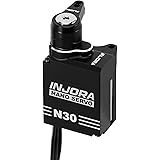
Control Surfaces and Servos: Once airborne, fixed-wing drones manipulate control surfaces like the rudder, ailerons, and elevators to steer and maintain stability. These surfaces are typically controlled remotely by electromechanical devices called servos. Regular pre-flight checks of servos, listening for unusual noises, are crucial to prevent inflight control issues.
-
Pitot Tube: Many fixed-wing RPAs use a pitot tube to measure indicated air speed by comparing dynamic air pressure with static air pressure. This airspeed is critical for ensuring sufficient lift over the wings. Always ensure the pitot tube openings are clear of debris for accurate readings.
-
Landing Methods: Landing fixed-wing RPAs can involve traditional landing gear on a runway, net capture systems, or even controlled stalls at low, safe altitudes, depending on the model and operational environment.
11. Inspection and Maintenance: The Cornerstone of Safety
Thorough inspection and diligent maintenance are not merely recommendations; they are fundamental to safe and reliable drone operation. Before and after every flight, a comprehensive inspection of critical RPAS elements is mandatory. This includes:
-
Propellers: Check for chips, cracks, or distortion.
-
Batteries: Look for any swelling, cracks, or unusual odors.
-
Hull, Flight Surfaces, and Arms: Inspect for structural damage or contamination.
Always address any warnings or messages displayed during startup, such as compass calibration requests. Respond promptly to mandatory action notifications from your drone manufacturer, performing necessary firmware upgrades, repairs, or component replacements. Maintaining detailed records of these maintenance activities, including dates of firmware updates and component changes, is a best practice. Some advanced drones, like Mavic 2s with their redundant IMUs, offer backup systems. While these provide an extra layer of safety, a message indicating the main unit has failed and a redundant unit is in use is a clear signal to repair the primary component immediately, rather than continuing to fly on a “spare tire.”
By delving into these intricate systems—from the ground control station to the individual propeller—drone pilots gain invaluable insight into how drones work, significantly enhancing their understanding and promoting safer, more effective flights.
Diving Deeper: Your Drone & RC Aircraft Questions Answered
What is the official name for a drone?
In many regions, a drone is officially called a Remotely Piloted Aircraft (RPA). When including the controller and communication link, it’s known as a Remotely Piloted Aircraft System (RPAS).
What is the Ground Control Station (GCS)?
The GCS is the handheld controller you use to pilot your drone. It’s your main interface, often combining joysticks and buttons with a smartphone or tablet.
What is the ‘brain’ of the drone?
The flight controller is the sophisticated ‘brain’ of the drone. It interprets your commands and adjusts the motors to ensure stable flight and manage other functions like obstacle avoidance.
Why are propellers important, and what should I check?
Propellers generate the lift and thrust for the drone to fly. Always inspect them before and after every flight for any damage like chips or cracks, and replace them if needed for safe operation.
What kind of batteries do drones use, and how should I care for them?
Most drones use Lithium Polymer (LiPo) batteries, valued for their power. It’s crucial to avoid overcharging or over-discharging them, and store them at around 50% capacity to maintain their lifespan and safety.