Are you strategizing your next aerial mission, weighing the critical choice between diverse UAV platforms? The video above concisely outlines key distinctions between fixed-wing and quadcopter drones. However, understanding the granular operational implications of each platform is paramount for mission success. Professionals in geospatial intelligence, security, agriculture, and industrial inspection demand specific tools. This deep dive explores the advanced capabilities and strategic deployment of these powerful unmanned aerial systems.
Quadcopter Drones: Agility and Precision for Tactical Operations
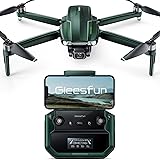
The quadcopter drone remains the workhorse for many immediate aerial requirements. Its inherent design prioritizes rapid deployment and agile maneuverability. This UAV category is exceptionally portable and lightweight. It requires minimal setup time, proving invaluable for time-sensitive missions. Operators can launch these drones quickly, often within minutes.
1. **Versatility and Gimbal Systems**
Quadcopter drones excel in versatility. They commonly integrate sophisticated gimbal-stabilized camera payloads. These gimbals provide multi-axis stabilization. This enables the capture of exceptionally smooth and clear imagery or video. Operators can precisely angle sensors to inspect specific targets. This capability is critical for detailed inspections and close-quarters reconnaissance. It ensures comprehensive data acquisition even in complex environments.
2. **Deployment Speed and Ease of Use**
Speed of deployment is a significant advantage. A quadcopter can be airborne almost immediately after arrival on site. This rapid readiness supports dynamic tactical scenarios. Its intuitive flight controls simplify operation. Training requirements are generally lower compared to fixed-wing systems. This makes them ideal for on-demand aerial intelligence gathering. Field teams can utilize them without extensive pre-mission calibration.
3. **Operational Flexibility**
Quadcopter drones can hover in place indefinitely. This provides persistent surveillance over a specific point of interest. They can navigate tight spaces with precision. Indoor operations or complex urban environments are often feasible. Vertical takeoff and landing (VTOL) capabilities eliminate the need for runways. This expands their operational footprint significantly. They are perfect for localized, high-detail data collection.
Fixed-Wing Drones: Endurance and Coverage for Expansive Missions
When vast areas require comprehensive mapping or persistent observation, the fixed-wing drone becomes indispensable. These platforms are engineered for extended flight durations and efficient wide-area coverage. While requiring slightly more setup time, their operational benefits for large-scale projects are unmatched. Their streamlined aerodynamics contribute to superior stability in varying wind conditions.
1. **Extended Flight Time and Range**
Fixed-wing drones offer significantly longer flight endurance. Typical flight times can reach or exceed 90 minutes. This extended airborne capability translates to greater operational range. They can cover hundreds of acres in a single sortie. This efficiency is critical for large-scale agricultural surveys or infrastructure monitoring. Fewer flights are needed to complete extensive mapping projects.
2. **Payload Versatility and Integration**
One primary strength lies in their adaptable payload bays. Operators can interchange various sensor packages. A 3D mapping camera, as mentioned, is a common payload. Thermal cameras are also frequently integrated for specific applications. Stereoscopic setups with two cameras provide enhanced depth perception. This adaptability allows for mission-specific sensor configurations. It maximizes data relevance for diverse operational requirements.
3. **Stealth and Area Coverage**
Fixed-wing drones exhibit remarkable acoustic and visual stealth. They fly at higher altitudes, rendering them virtually silent. Their distant operation makes them very difficult to observe from the ground. This characteristic is crucial for discreet surveillance missions. Furthermore, their efficient flight dynamics enable them to survey much greater distances. This broad coverage is essential for remote sensing and large-area reconnaissance.
Strategic Selection: Matching UAV Capabilities to Mission Objectives
The choice between a fixed-wing drone and a quadcopter drone hinges entirely on the mission’s specific capability requirements. One drone is not inherently “better” than the other. Instead, each system offers distinct advantages tailored to different operational contexts. Understanding these nuances ensures optimal resource allocation and superior data acquisition. This strategic approach minimizes costs and maximizes mission efficacy.
1. **Precision Inspection vs. Broad Area Survey**
For detailed inspection of localized structures, quadcopters are preferred. Their hovering ability and precise sensor control are key. Consider infrastructure like bridges, cell towers, or industrial facilities. Fixed-wing UAVs, conversely, excel in expansive area mapping. They are ideal for large agricultural fields, extensive construction sites, or long linear infrastructure. Their endurance allows for efficient data collection over vast terrains.
2. **Rapid Deployment vs. Sustained Operations**
Emergency response or immediate tactical intelligence demands quick deployment. Quadcopters provide this instant readiness. For planned, extended surveillance or mapping campaigns, fixed-wing platforms offer sustained performance. Their 90-minute flight endurance allows for methodical, long-duration data capture. Mission planners must weigh setup time against mission duration. The operational tempo significantly influences platform selection.
3. **Payload Customization and Data Specificity**
Both platforms support varied payloads, but their applications differ. Quadcopters often carry high-resolution RGB or multispectral cameras for close-up data. Fixed-wings frequently integrate advanced LiDAR, hyperspectral, or thermal sensors. These are used for large-scale environmental monitoring or geophysical surveys. The specific data output required drives payload integration decisions. This impacts sensor choice and drone platform selection for fixed-wing drone applications.
Mission Readiness Q&A: Choosing Your Ideal Drone
What is a quadcopter drone?
A quadcopter drone is a highly portable and agile drone known for its rapid deployment and ability to hover in place. It’s often used for detailed inspections and close-quarters operations.
What is a fixed-wing drone?
A fixed-wing drone is designed for long flight durations and efficient coverage of large areas. It’s ideal for extensive mapping projects and sustained observation missions.
What is the main difference between a quadcopter and a fixed-wing drone?
Quadcopter drones offer agility, precision, and quick deployment for localized tasks, while fixed-wing drones provide longer flight times and wider coverage for expansive missions. The best choice depends on the specific mission needs.
When should I choose a quadcopter drone?
You should choose a quadcopter drone for missions requiring rapid deployment, precise hovering, and detailed inspection of localized areas or structures. They are also suitable for emergency response and tactical intelligence gathering.