Demystifying Drone Choices: Fixed-Wing Versus Multi-Rotor Drones
Navigating the diverse world of Unmanned Aerial Vehicles (UAVs) can be a complex endeavor, especially when deciding between a fixed-wing or a multi-rotor drone for specific applications. As explored in the accompanying video, fundamental distinctions between these two primary drone types dramatically influence their operational capabilities and suitability for various tasks. For instance, multi-rotor drones typically offer flight times ranging from 30 to 50 minutes, whereas fixed-wing systems can cover three to four times more area in a single flight. This significant difference in endurance and coverage highlights the importance of understanding their respective advantages. Choosing the appropriate drone platform is pivotal for optimizing efficiency and achieving desired outcomes in commercial operations. Factors such as flight stability, operational ease, and the ability to cover expansive territories must be carefully weighed. Furthermore, the environment in which the drone will operate also plays a crucial role in determining the ideal choice. Therefore, a comprehensive comparison of these drone technologies is essential for any prospective operator.Exploring the Versatility of Multi-Rotor Drones
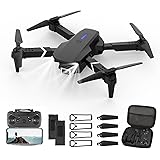
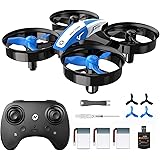
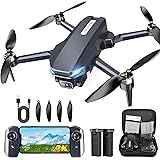
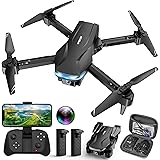
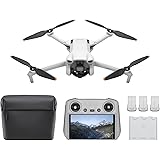
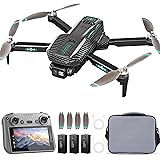
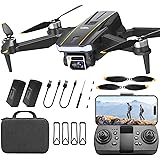
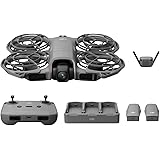
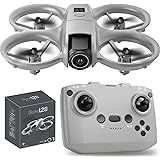
Multi-rotor drones, commonly recognized by their four-rotor (quadcopter) configuration, represent a significant segment of the commercial drone market. These systems are also available in diverse variants, including hexacopters (six rotors) and octocopters (eight rotors), with coaxial designs featuring stacked motors for enhanced lift. A hallmark characteristic of multi-rotor drones is their exceptional stability, even when operating in high wind conditions, which is particularly beneficial for precision tasks. Their ability to take off and land quickly, coupled with straightforward assembly processes, makes them highly accessible. Moreover, multi-rotor drones excel in operations requiring close proximity to objectives. Consequently, they are frequently deployed for detailed inspections under bridges, near power lines, or around communication towers where precise maneuvering is paramount. The ease of operation for multi-rotor drones is another significant advantage, with leading manufacturers like DJI offering highly user-friendly solutions. Should an unexpected event occur during flight, simply releasing the controls causes the drone to stop and hover in place, thereby enhancing operational safety. This inherent ease of use, combined with rapid deployment times, renders multi-rotor drones an excellent choice for detailed, localized tasks.Understanding Fixed-Wing and VTOL Fixed-Wing Drone Capabilities
In contrast to multi-rotor drones, fixed-wing drones resemble traditional airplanes in their design and flight mechanics. Within this category, Vertical Takeoff and Landing (VTOL) fixed-wing drones represent an advanced hybrid solution. A VTOL fixed-wing system integrates multi-rotor capabilities for vertical takeoff and landing with the aerodynamic efficiency of a fixed-wing aircraft for forward flight. For example, systems like the Dragonfish utilize multiple motors to achieve vertical ascent. The term VTOL precisely describes this functionality: vertical takeoff and landing. The drone lifts off vertically, transitions into fixed-wing mode for efficient forward motion, and then, upon returning, converts back to multi-rotor mode to hover and land precisely in its original spot. A key benefit of a VTOL fixed-wing drone is its minimal spatial requirements for takeoff and landing. Operators can deploy these systems from a compact 40-foot by 40-foot area, eliminating the need for a runway. Once airborne and clear of obstacles, the drone transitions into its high-speed fixed-wing flight mode, allowing it to cover substantially larger areas than a multi-rotor drone.Comparing Performance: Flight Time and Area Coverage
The fundamental difference in how multi-rotor and fixed-wing drones generate lift directly impacts their flight endurance and area coverage. Multi-rotor drones rely on all their motors to continuously generate thrust for lift, which, while providing stability, also consumes significant battery power. Consequently, multi-rotor systems typically offer flight times between 30 to 50 minutes, making them ideal for shorter, more intensive missions. Their design necessitates greater power expenditure to overcome gravity throughout the entire flight duration. Conversely, fixed-wing drones, once in forward flight, generate lift from their wings, much like an airplane. This aerodynamic lift reduces the workload on the motors, which then primarily serve to propel the aircraft forward. This reduced power consumption translates into significantly longer flight times and the capacity to cover vast areas. Therefore, a fixed-wing drone can survey three to four times the geographical expanse compared to a multi-rotor drone during a single mission. This extended range makes them invaluable for large-scale mapping, surveying, and agricultural applications where covering considerable ground efficiently is a top priority.Operational Differences and Key Applications
While both multi-rotor and fixed-wing platforms can undertake tasks like aerial mapping, their operational approaches and optimal applications differ considerably. Multi-rotor drones typically fly slower and can maintain lower altitudes, providing the capability to capture high-resolution imagery with appropriate sensors. This precision is advantageous for detailed structural inspections or close-up topographical analyses. Their ability to hover and maneuver in confined spaces further solidifies their role in intricate, localized operations. In contrast, fixed-wing drones generally operate at higher speeds and altitudes to maximize their coverage. Although they cover more ground, achieving comparable resolution to a multi-rotor drone might necessitate specialized sensors and parameter adjustments. The core strength of fixed-wing drones lies in their capacity for extensive area coverage, which makes them perfect for large-scale projects such as land management, environmental monitoring, or long-range infrastructure assessment. Both platforms offer user-friendly interfaces, automated flight plans, and robust safety features like “return to home” functions, though fixed-wing operators must exercise greater vigilance regarding obstacles and altitude during expansive flights. Ultimately, the best choice among fixed-wing or multi-rotor drones hinges on the specific operational requirements and the scope of the mission.Clearing the Air: Your Drone Questions Answered
What are the two main types of drones discussed?
The article discusses two primary drone types: multi-rotor drones, which resemble helicopters with multiple propellers, and fixed-wing drones, which look like small airplanes.
What are multi-rotor drones commonly used for?
Multi-rotor drones are often used for detailed inspections, operating in confined spaces, and tasks requiring precision due to their excellent stability and ability to hover. They are also known for ease of operation and quick deployment.
What are fixed-wing drones primarily used for?
Fixed-wing drones are ideal for covering large geographical areas efficiently, making them suitable for extensive mapping, surveying, and large-scale agricultural applications. They can fly for much longer durations compared to multi-rotor drones.
What is a key advantage of fixed-wing drones over multi-rotor drones?
A key advantage is their ability to cover three to four times more area in a single flight. This is because fixed-wing drones generate lift from their wings once airborne, using less battery power than multi-rotor drones that constantly rely on their motors for lift.