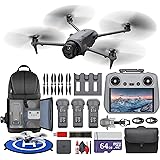
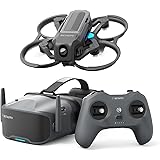
The F390 HYBRID VTOL drone, as showcased in the accompanying video, represents a significant advancement in unmanned aerial vehicle (UAV) technology. This innovative aircraft combines the best attributes of both multi-rotor and fixed-wing designs, offering unparalleled versatility and operational efficiency. Watching its maiden or test flights provides a compelling glimpse into the future of aerial operations, demonstrating the seamless transition between vertical takeoff and landing and efficient forward flight.
Exploring the F390 Hybrid VTOL Drone: A New Era in UAVs
The F390 HYBRID VTOL drone distinguishes itself through its sophisticated design, which inherently addresses many limitations faced by traditional drone platforms. Unlike conventional quadcopters, which excel at hovering but are energy-inefficient in forward flight, or fixed-wing drones that require runways for takeoff and landing, the F390 HYBRID offers the best of both worlds. It combines the agile vertical capabilities of a multi-rotor system with the speed and endurance of a fixed-wing aircraft. This hybridization unlocks a vast array of new possibilities for drone applications across various industries.
Understanding the operational mechanics of such a system reveals the depth of engineering involved. Imagine a drone that can ascend directly from a confined space, transition smoothly into high-speed, long-duration flight, and then return to land precisely back in its original spot. This capability is precisely what the F390 HYBRID VTOL drone delivers, setting a new standard for mission adaptability and efficiency in the field.
The Engineering Behind Hybrid VTOL Drones
The core innovation in the F390 HYBRID VTOL drone lies in its hybrid propulsion system and integrated aerodynamic design. This complex engineering marvel allows the drone to dynamically adjust its flight mode based on mission requirements. During takeoff and landing, multiple electric motors and propellers provide the necessary vertical lift and control, akin to a standard multi-rotor drone. Subsequently, once airborne and at cruising altitude, the F390 transitions to fixed-wing flight, where its aerodynamic body and often a larger, more efficient propeller or jet engine take over for propulsion.
This seamless transition is orchestrated by advanced flight control systems that manage the shift in propulsion and aerodynamic surfaces. Furthermore, the “hybrid” aspect often extends beyond the flight mechanics to the power source itself. Many such VTOL aircraft incorporate a combination of electric battery power for vertical maneuvers and a fuel-based internal combustion engine for extended fixed-wing endurance, delivering a superior operational envelope. This sophisticated integration ensures reliability and maximizes flight performance, making the F390 HYBRID VTOL drone a robust solution.
Advantages of Hybrid Propulsion in UAVs
The adoption of hybrid propulsion in UAVs like the F390 HYBRID VTOL drone brings forth several compelling advantages, revolutionizing how aerial missions can be conducted. These benefits directly address critical performance gaps found in single-mode drone platforms.
-
Extended Flight Endurance: By utilizing fuel-efficient internal combustion engines for cruise flight, hybrid VTOL drones can achieve significantly longer flight times compared to purely electric multi-rotors. This allows for vast areas to be covered in a single sortie.
-
Increased Payload Capacity: The efficiency of fixed-wing flight and the power of hybrid engines mean these drones can carry heavier and more sophisticated payloads. This is crucial for applications requiring high-resolution sensors, specialized equipment, or even cargo delivery.
-
Versatile Operational Environments: The ability to take off and land vertically eliminates the need for runways, enabling deployment in remote, rugged, or urban environments where space is limited. Concurrently, their fixed-wing capabilities allow them to cover large distances quickly.
-
Enhanced Speed and Range: Fixed-wing flight is inherently faster and more efficient for long-distance travel than multi-rotor flight. Consequently, hybrid VTOL drones can reach targets more rapidly and operate over greater geographical areas.
-
Reduced Operating Costs: While initial investment might be higher, the extended endurance and efficiency can lead to fewer flights required for the same mission, resulting in lower operational costs over the drone’s lifespan. Fuel costs for long-range missions are often less than the battery cycling and charging infrastructure for electric equivalents.
These advantages collectively position the F390 HYBRID VTOL drone as a highly attractive platform for demanding professional applications, pushing the boundaries of what UAVs can achieve.
Real-World Applications of the F390 HYBRID VTOL Drone
The unique capabilities of the F390 HYBRID VTOL drone open up a multitude of possibilities across various sectors, demonstrating its potential to be a transformative technology. Its blend of endurance, speed, and vertical maneuverability makes it ideal for missions that were previously challenging or impossible for conventional drones.
Consider the expansive field of aerial mapping and surveying. Imagine if a single F390 HYBRID VTOL drone could launch from a small clearing, survey hundreds of acres of agricultural land or rugged terrain over several hours, and then return precisely to its launch point for data retrieval. This capability significantly reduces the time and resources traditionally associated with large-scale mapping projects, offering unprecedented efficiency.
Furthermore, in critical inspection tasks, such as monitoring long stretches of pipelines, power lines, or railway tracks, the F390 HYBRID excels. Its extended range allows for comprehensive inspections of vast infrastructure networks in a single flight, collecting crucial data on potential faults or maintenance needs. This proactive monitoring approach enhances safety and significantly minimizes costly downtime. Similarly, for surveillance and security operations, these drones can provide persistent oversight of large areas, offering real-time intelligence for border patrol, emergency response, or environmental protection agencies.
The potential for rapid logistics and delivery in remote or difficult-to-access areas is also considerable. Envision the F390 HYBRID VTOL drone delivering emergency medical supplies to a disaster zone, flying over impassable terrain, and landing precisely where needed, or providing swift package delivery to isolated communities. This technology is poised to redefine aerial logistics, offering faster and more reliable solutions. Ultimately, the F390 HYBRID VTOL drone is not merely a piece of hardware but a versatile tool with the capacity to solve complex problems and drive innovation across numerous industries.
Landing Your F390 HYBRID VTOL FPV Test Flight Questions
What is the F390 HYBRID VTOL drone?
The F390 HYBRID VTOL drone is an advanced unmanned aerial vehicle (UAV) that combines the capabilities of both multi-rotor and fixed-wing drones, offering great versatility.
What does ‘VTOL’ mean for this drone?
VTOL stands for ‘Vertical Take-Off and Landing,’ meaning the drone can ascend and descend straight up and down without needing a runway, similar to a helicopter.
How is a ‘hybrid’ drone different from a traditional drone?
A hybrid drone combines the agile vertical capabilities of a multi-rotor system with the speed and endurance of a fixed-wing aircraft, allowing it to transition seamlessly between these flight modes.
What are some benefits of using a hybrid VTOL drone?
Hybrid VTOL drones offer extended flight endurance, can carry heavier payloads, and can operate in versatile environments since they don’t require runways for takeoff or landing.