The remarkable rise of drones from niche military applications to widespread commercial and recreational use is one of the defining technological shifts of our era. Initially viewed with skepticism, these uncrewed aerial vehicles (UAVs) have become indispensable tools across various sectors, ranging from aerial photography and filmmaking to sophisticated surveillance and even nascent delivery systems. As the video above eloquently introduces, understanding the fundamental principles of how drones fly and their core components is the essential first step for anyone aspiring to delve into drone programming.
The accessibility of drone technology has dramatically improved due to advancements in motor efficiency and affordability, fueling a surge in innovation. Consequently, the ability to program a drone for specific tasks, whether for automated inspections or complex aerial maneuvers, is evolving into a highly sought-after skill. This foundational knowledge empowers enthusiasts and professionals alike to harness the full potential of these versatile machines.
What is a Drone? Beyond the Hum
The term “drone” itself, originally referring to a continuous low humming sound, has colloquially come to represent these sophisticated UAVs. While perhaps not the most descriptive, it has stuck in popular lexicon. Modern drones are far more than just buzzing contraptions; they are complex systems integrating advanced aerodynamics, precise control mechanisms, and sophisticated software.
Their popularity stems not only from technological progress but also from their incredible utility. Drones are now integral to numerous industries, undertaking tasks previously deemed too dangerous, costly, or time-consuming for human operators. From mapping vast agricultural fields to inspecting towering wind turbines, their applications continue to expand, solidifying their place in our technological landscape. This widespread adoption underscores the growing demand for individuals who understand how drones fly and can effectively program them.
Diverse Drone Designs: From Quadcopters to Octocopters
Drones manifest in a multitude of shapes and sizes, each optimized for different purposes and performance characteristics. The number of propellers often dictates the drone’s classification, which in turn influences its stability, lift capacity, and maneuverability. Understanding these distinctions is crucial for selecting or designing a drone suitable for a particular application.
- **Quadcopter:** The most common and recognizable type, featuring four propellers or motors. These drones strike an excellent balance between stability, maneuverability, and cost-effectiveness, making them popular for hobbyists and many commercial uses.
- **Hexacopter:** Equipped with six propellers, a hexacopter offers increased lift capacity and enhanced stability compared to a quadcopter. This configuration is often chosen for professional photography or cinematography where payload capacity and flight redundancy (the ability to fly even if one motor fails) are critical.
- **Octocopter:** Utilizing eight propellers, octocopters represent the pinnacle of stability and lifting power among multirotor drones. They are typically employed for heavy-duty applications, such as carrying professional-grade camera equipment, industrial sensors, or even light cargo, where maximum reliability is paramount.
Each configuration has inherent advantages and disadvantages concerning efficiency, complexity, and redundancy. Consequently, the choice of drone type significantly impacts its performance envelope and operational suitability for specific tasks, directly relating to the intricacies of how drones fly.
Anatomy of a Drone: Key Components Explained
A drone is an intricate symphony of interconnected components, each playing a vital role in its ability to navigate the skies. Understanding these individual parts is fundamental to grasping the overall system. From the structural frame to the sophisticated sensors, every element contributes to the drone’s flight capabilities and functionality.
-
Frame
The frame, often referred to as the body or chassis, serves as the skeletal structure that holds all other components together. Its design and material properties are critical for the drone’s structural integrity and flight performance. Lightweight yet strong materials are paramount to maximize flight time and payload capacity.
Most high-performance drones utilize carbon fiber for their frames due to its exceptional strength-to-weight ratio and rigidity. Conversely, DIY enthusiasts often opt for more accessible materials such as wood or 3D-printed plastics, offering flexibility for custom designs and prototyping. The frame effectively withstands the forces generated during how drones fly, providing a stable platform.
-
Motors
Motors are the powerhouses of a drone, generating the rotational force necessary to spin the propellers and create lift. The type of motor significantly impacts the drone’s efficiency, power, and overall cost. Choosing the right motor is a key design consideration for any drone build.
There are two primary types: brushed motors, which are simpler, less expensive, and typically found in smaller, entry-level drones, and brushless motors, which are more costly but offer superior efficiency, power, and a better weight-to-power ratio. Brushless motors are favored for their durability and performance in higher-end and commercial drones, providing reliable thrust for sustained flight.
-
Propellers
Propellers are aerodynamic blades designed to generate thrust when rotated by the motors, converting rotational energy into vertical lift. Their design, including the number of blades and pitch, directly influences the amount of thrust produced and the propeller’s efficiency. For stable flight, drones typically employ two types of propellers: those that rotate clockwise (CW) and those that rotate counter-clockwise (CCW).
This opposing rotation strategy is crucial for neutralizing angular momentum. If all propellers spun in the same direction, the drone itself would rotate uncontrollably. By having half rotating CW and the other half CCW, these rotational forces cancel out, allowing the drone to maintain a stable orientation. While more blades can generate greater thrust, this often comes at the expense of efficiency due to increased drag and turbulence.
-
Electronic Speed Controller (ESC)
The ESC acts as the intermediary between the flight controller and the motors, precisely regulating their speed. It converts the direct current (DC) signal from the battery into the alternating current (AC) required by brushless motors, or modulates the DC current for brushed motors. Accurate motor speed control is paramount for achieving stable flight and executing precise maneuvers.
Drones can have individual ESCs for each motor, allowing for fine-tuned control, or they may integrate multiple ESCs onto a single board for a more compact design. The responsiveness and reliability of the ESCs directly influence the drone’s agility and stability during flight, making them critical for how drones fly effectively.
-
Power Distribution Board (PDB)
The PDB efficiently distributes electrical power from the main battery to all the drone’s components, including the ESCs (and thus the motors) and the flight controller. It acts as a central hub for power management, ensuring that each component receives the necessary voltage and current without overloading.
A well-designed PDB minimizes electrical interference and ensures consistent power delivery, which is vital for the reliable operation of sensitive electronics on board. This component safeguards the intricate power needs of the drone’s various systems, facilitating uninterrupted operation.
-
Flight Controller
Considered the “brain” of the drone, the flight controller processes inputs from various sensors, the receiver, and pre-programmed commands. It then calculates the necessary adjustments to motor speeds to maintain stability, execute maneuvers, and follow flight paths. This sophisticated piece of hardware and software translates pilot commands and environmental data into actionable motor instructions.
The flight controller continually monitors the drone’s orientation, position, and altitude, making thousands of micro-adjustments per second. Its algorithms are responsible for the drone’s ability to hover, ascend, descend, and perform complex aerial acrobatics, epitomizing the intricate process of how drones fly.
-
Battery
The battery is the power source for every electronic component on the drone. Lithium Polymer (LiPo) batteries are predominantly used due to their high energy density and lightweight characteristics, which are crucial for maximizing flight time. Battery capacity and discharge rate (C-rating) are important factors influencing performance.
Optimizing the battery’s weight and efficiency is a constant challenge in drone design, as it directly impacts the duration the drone can remain airborne. Proper battery management, including charging and storage, is also essential for safety and longevity.
-
Receiver/Bluetooth
This component establishes the communication link between the drone and the remote control (or a Bluetooth-enabled device like a smartphone). The receiver interprets commands sent by the pilot and relays them to the flight controller. Robust and reliable signal transmission is vital to prevent loss of control during flight operations.
Modern systems often incorporate redundancy and anti-interference measures to ensure a stable connection. For programmable drones like the Tello, Wi-Fi or Bluetooth connectivity is often used to send programming commands directly from a computer or mobile device.
-
Camera & Video Transmitter (VTX)
Many drones are equipped with cameras for photography, videography, or real-time first-person view (FPV) flying. The camera captures visual data, which can either be stored onboard (e.g., on an SD card) or transmitted wirelessly. The resolution and frame rate of the camera are key considerations for image quality.
The VTX is specifically responsible for wirelessly transmitting live video footage from the camera to a ground station, FPV goggles, or a smartphone. This real-time feed allows pilots to see what the drone sees, enabling precise navigation and capturing dynamic aerial perspectives. The range and clarity of the VTX are paramount for an immersive FPV experience.
-
Sensors
Drones rely heavily on an array of sophisticated sensors to gather environmental data, enabling autonomous flight and precise control. These sensors provide the flight controller with crucial information about the drone’s surroundings and its own state, underpinning the advanced capabilities of how drones fly.
- **Pressure Sensor:** Measures atmospheric pressure to determine the drone’s altitude above ground. This is vital for maintaining a consistent height and for executing vertical movements.
- **GPS (Global Positioning System):** Provides precise positional data, allowing the drone to know its exact latitude, longitude, and altitude. GPS is essential for outdoor navigation, waypoint missions, and return-to-home functions.
- **IMU (Inertial Measurement Unit):** A combined sensor package typically comprising accelerometers and gyroscopes. Accelerometers measure linear acceleration along three axes, while gyroscopes measure angular velocity. This data is used to determine the drone’s orientation (pitch, roll, and yaw) and its acceleration, enabling the flight controller to stabilize the aircraft in real-time.
- **Optical Flow Sensors:** Often used for indoor positioning, these sensors analyze changes in visual patterns on the ground to estimate the drone’s movement relative to its immediate environment.
- **Ultrasonic/Lidar Sensors:** Employed for obstacle avoidance and precise altitude holding, especially at low altitudes, by emitting sound or light waves and measuring their reflection time.
The integration and calibration of these sensors are paramount for the drone’s autonomous capabilities and its ability to respond accurately to external stimuli and pilot commands.
The Science of Flight: Decoding How Drones Fly
The apparent complexity of multi-rotor drone movement, with its multiple motors and axes of motion, is underpinned by relatively simple and intuitive physics principles. Drones, particularly quadcopters, achieve flight and maneuverability by precisely controlling the speed of their individual propellers, thereby manipulating lift and thrust. This intricate dance of forces allows a drone to move with four degrees of freedom: translating in three directions and rotating along one axis.
-
Maintaining Stability: The Zero Angular Momentum Principle
Firstly, as previously mentioned, a quadcopter employs two propellers rotating clockwise (CW) and two rotating counter-clockwise (CCW). This ingenious arrangement is critical for maintaining stability. The opposing torques generated by the CW and CCW propellers effectively cancel each other out, resulting in a net zero angular momentum. Consequently, the drone remains stationary in terms of yaw (rotational movement around its vertical axis) unless explicitly commanded to rotate.
-
Vertical Movement: Ascending, Descending, and Hovering
Secondly, controlling vertical movement is achieved by uniformly adjusting the speed of all motors simultaneously. When all motors spin faster, they generate collective lift greater than the drone’s total weight, causing it to ascend. Conversely, decreasing the speed of all motors reduces the lift, allowing the drone to descend when lift becomes less than its weight.
To hover in place, the flight controller continuously adjusts motor speeds so that the total lift generated precisely equals the drone’s weight. This delicate balance of forces ensures that the drone remains suspended at a constant altitude, a fundamental aspect of how drones fly with precision.
-
Horizontal Movement: Translating Left, Right, Forward, and Backward
Thirdly, translational movements—moving horizontally in any direction—are accomplished by subtly tilting the drone’s body. This tilt redirects a component of the total thrust, propelling the drone in the desired direction. The flight controller achieves these tilts by differentially adjusting the speeds of specific motors.
- **Moving Left:** To move left, the flight controller reduces the speed of the left-side motors and increases the speed of the right-side motors. This creates a differential in lift, causing the drone to tilt left, which then generates a horizontal thrust component to the left.
- **Moving Right:** Similarly, for moving right, the speed of the right-side motors is decreased while the left-side motors’ speed is increased, inducing a rightward tilt and subsequent rightward translation.
- **Moving Forward:** To move forward, the front motors’ speed is decreased, and the back motors’ speed is increased. This causes the drone to tilt forward, pushing it in that direction.
- **Moving Backward:** Conversely, increasing the front motors’ speed and decreasing the back motors’ speed creates a backward tilt, propelling the drone in reverse.
-
Rotational Movement: Yawing Clockwise and Counter-Clockwise
Finally, rotating the drone around its vertical axis (yaw) cleverly utilizes the inherent opposing torques of the CW and CCW propellers. By intentionally disrupting the balance of these torques, the drone can be commanded to spin. To rotate the drone clockwise, the flight controller decreases the speed of the motors spinning clockwise and simultaneously increases the speed of the motors spinning counter-clockwise. This imbalance creates a net torque that causes the drone to yaw clockwise.
Conversely, to rotate counter-clockwise, the speed of the counter-clockwise motors is decreased, and the speed of the clockwise motors is increased. This generates a net torque in the opposite direction, causing the drone to yaw counter-clockwise. Mastery of these motor speed adjustments is the essence of understanding how drones fly and their versatile maneuverability.
Getting Started with Drone Programming: The Tello Drone
For individuals embarking on the journey of drone programming, selecting the right beginner-friendly platform is paramount. The Tello drone, produced by Ryze and incorporating advanced flight control technologies from DJI and Intel, stands out as an excellent choice. It offers an optimal blend of features, safety, and programmability, making it ideal for learning without requiring significant prior hardware expertise.
The Tello drone is a compact and robust device, perfectly suited for indoor use thanks to its multiple integrated safety features. Its onboard camera is capable of shooting 720p video at 30 frames per second, providing decent quality for beginner projects involving computer vision or FPV. Importantly, the drone boasts an impressive flight time of approximately 13 minutes and a flight distance of about 100 meters, reaching a top speed of 8 meters per second, offering ample opportunity for practice and experimentation.
What truly sets the Tello drone apart for programmers is its remarkable programmability. Through its Software Development Kit (SDK), users can control the drone’s movements and apply sophisticated computer vision techniques. Crucially, all communication and control are handled wirelessly over Wi-Fi, eliminating the need for complex external wiring or even a separate router. The inclusion of two antennas ensures stable video transmission, which is vital for real-time applications.
While the video above mentions that roughly 80% of drone programming concepts apply universally, the remaining 20% are specific to the Tello’s SDK, providing a focused learning experience. When acquiring a Tello drone, consumers have a choice between the standard and EDU (educational) versions, both compatible with programming courses. Furthermore, two common retail packages are available:
- **Regular Pack:** This includes the drone, a single battery, a set of extra propellers, and propeller guards. Charging is conveniently done via a USB cable connected directly to the drone.
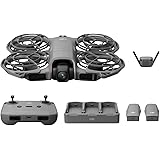
- **Jumbo Pack:** A more comprehensive option, the Jumbo Pack provides everything from the regular pack, plus two additional batteries and a three-slot battery charging hub. This enhanced battery capacity is particularly beneficial for programming enthusiasts, enabling extended testing sessions. Users can rotate batteries, ensuring one is always charging while another is in use, thereby minimizing downtime and maximizing valuable learning time. This practical advantage significantly enhances the programming experience and allows for more thorough exploration of how drones fly through code.
The Tello drone serves as an accessible gateway to understanding the mechanics of flight and the intricacies of drone programming, providing a hands-on platform to apply theoretical knowledge.
Decoding Drone Flight: Your Questions Answered
What is a drone?
A drone is an uncrewed aerial vehicle (UAV) that combines advanced aerodynamics and precise control mechanisms. They are used for many tasks, including aerial photography, surveillance, and inspections.
What are the common types of drones based on their propellers?
Drones are often categorized by the number of propellers they have. The most common types are quadcopters (four propellers), hexacopters (six propellers), and octocopters (eight propellers).
What are some essential parts that make a drone fly?
Key components include the frame (body), motors (to spin the propellers), propellers (to generate lift), a flight controller (the ‘brain’ for stability), and a battery (to provide power).
How do drones stay stable and move in the air?
Drones maintain stability by using propellers that spin in opposing directions, which cancels out rotational forces. They move by precisely adjusting the speed of individual motors, causing the drone to tilt and push itself in a desired direction.