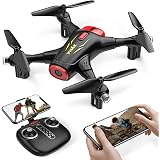
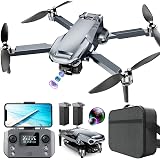
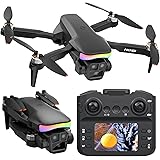
The world of Unmanned Aerial Vehicles (UAVs), commonly known as drones, has expanded dramatically. These sophisticated flying machines are no longer mere novelties. Instead, they represent a pivotal shift in various industries. Understanding the foundational elements of drone technology is crucial. The accompanying video offers an excellent primer on these essential drone basics. It explores key components and various classification methods. This article builds upon that initial insight. It provides a more comprehensive look at drone subsystems, types, and applications.
Drone technology is complex. It integrates multiple engineering disciplines. From aviation to robotics, each field contributes to UAV functionality. Delving into these aspects offers a clearer picture of drone capabilities. It also highlights their potential future developments.
Understanding Drone Fundamentals: What is a UAV?
An Unmanned Aerial Vehicle is an aircraft. It operates without a human pilot or crew on board. These machines are guided remotely. They can also fly autonomously using pre-programmed flight plans. Drones are essentially flying robots. They perform tasks that might be too dangerous or impractical for manned aircraft.
The core concept is simple. A drone combines airframe, propulsion, and control systems. It typically carries a payload. This payload can vary significantly. Common examples include cameras, sensors, or delivery packages.
Essential Subsystems of a Modern Drone
Drones are intricate systems. They rely on interconnected components. These subsystems enable flight, control, and mission execution. A basic understanding of these parts is beneficial.
Electrical Subsystems: The Drone’s Brain and Nerves
Like a modern computer, a drone features diverse electrical subsystems. These include input devices, output devices, storage, and communication modules. Input devices gather crucial environmental and operational data. Examples include touch panels, keypads, microphones, and cameras. Various sensors also fall into this category. Remote controllers serve as primary input sources for human operators.
Output devices translate processed data into actionable functions. Displays provide visual feedback. Motors drive the propellers, enabling flight. Fans assist in cooling. LEDs indicate status or provide illumination. These components work in unison. They ensure the drone performs its designated tasks.
Storage mechanisms retain essential operational data. Solid-State Drives (SSDs) are frequently used. They offer fast and reliable data access. Memory modules, flash storage, and even hard disk drives also play a role. Secure Digital (SD) cards provide portable data storage. This is particularly important for recording mission data.
Communication devices facilitate interaction. They link the drone to its operator and other systems. Wired LAN connections are used for ground control. Wireless LAN (Wi-Fi) offers flexible connectivity. Mobile networks (3G, 4G, LTE) provide long-range communication. GPS (Global Positioning System) receivers enable precise navigation. USB interfaces allow for data transfer and programming. These communication links are vital for real-time control and data transmission.
Software Components: Orchestrating Drone Operations
Software is the intelligence behind drone flight. It organizes the hardware’s functions. There are four primary software categories. Firmware components are low-level programs. They control specific hardware parts. The Operating System (OS) and drivers manage core drone functions. They enable hardware interaction. Sensing, navigation, and control software interpret data. This data comes from sensors. It then executes flight maneuvers. Application-specific components enable specialized tasks. These tasks include mapping, inspection, or delivery. Sophisticated algorithms ensure stable flight. They also manage complex autonomous missions.
Mechanical Systems: The Drone’s Structure and Form
The mechanical system provides the drone’s physical structure. It protects the internal electronics. Enclosures house all the delicate components. The industrial design (ID) dictates the drone’s exterior. It influences appearance and aerodynamic performance. A well-designed ID is crucial. It ensures optimal flight characteristics and durability.
Drone frames often use specific configurations. Quadcopters frequently feature X-frames. Some models use H-frames. These frame shapes influence stability and maneuverability. The frame serves as the drone’s base. It supports propellers, motors, and landing gear. The main body contains the Printed Circuit Board Assembly (PCBA). This includes flight controllers and motor drivers. A robust power source, typically a battery, is also integrated. Proper mechanical design is essential for overall drone integrity.
Classifying Unmanned Aerial Vehicles
Drones are categorized in various ways. These classifications help define their capabilities and uses. Understanding these categories is key. It helps in selecting the right drone for specific needs. The video introduces several important classifications.
Classification by Weight: Size Matters for Regulation and Use
Drone weight is a critical classification factor. It often determines regulatory requirements. Weight also influences performance and payload capacity. These categories are globally recognized. They standardize drone usage across different applications.
-
Nano UAVs: These weigh less than 250 grams. They are often used for recreational flying. Their small size makes them highly portable. Due to their minimal weight, they usually face fewer regulatory restrictions.
-
Micro UAVs: Weighing between 250 grams and 2 kilograms. These drones offer more capability than nano drones. They are suitable for entry-level aerial photography. They are also used for simple inspection tasks.
-
Miniature or Small UAVs: This category spans 2 to 25 kilograms. These drones are versatile. They are popular for professional photography. They also excel in surveying and agricultural monitoring. Their increased size allows for larger payloads and longer flight times.
-
Medium UAVs: Ranging from 25 to 150 kilograms. These are serious industrial workhorses. They are deployed in logistics, heavy inspection, and specialized scientific research. Their substantial weight supports advanced sensor arrays.
-
Large UAVs: Any drone over 150 kilograms. These are often used for military operations. They also perform large-scale cargo transport. Such heavy drones require significant infrastructure for operation. They demand advanced piloting skills.
Classification by Degree of Autonomy: From Remote Control to Self-Piloting
Autonomy defines how much human intervention a drone needs. This spectrum ranges from fully manual to entirely self-sufficient flight. It impacts operational complexity and mission scope.
-
Remotely Piloted: The drone requires constant human control. An operator dictates every movement. This method is common for recreational drones. It is also used in many commercial applications. Manual piloting offers immediate responsiveness.
-
Hybrid Autonomy: These drones combine manual control with autonomous features. An operator might guide the drone to a target area. After reaching the target, the drone could execute an autonomous mission. It then returns to base automatically. This blend provides flexibility and efficiency.
-
Fully Autonomous: The drone operates without direct human input after launch. It follows a pre-programmed flight path. It can make real-time decisions based on sensor data. This level of autonomy is critical for complex missions. These include surveillance, long-range deliveries, and exploration. Modern AI plays a significant role in fully autonomous systems.
Classification by Altitude: Reaching New Heights
Drones operate across a wide range of altitudes. Different flight ceilings enable various operational capabilities. Altitude also impacts communication range and endurance. The classifications are generally based on maximum operational height.
-
Hand-held Drones: These fly up to 2,000 feet (approximately 600 meters). Their operational range is typically limited to 2 kilometers. They are ideal for close-range surveillance. They are also used for photography in confined spaces.
-
Close Drones: These can reach altitudes of 5,000 feet (about 1,500 meters). They offer a control range of around 10 kilometers. Such drones are useful for local area mapping. They are also employed for environmental monitoring.
-
NATO Type: Flying up to 3,000 meters (10,000 feet). These drones have a range of 50 kilometers. They are designed for tactical reconnaissance missions. They provide an extended view of operational areas.
-
Tactical Type: Capable of 5,500 meters (18,000 feet) altitude. Their range extends to 160 kilometers. These are serious tactical assets. They provide sustained observation and intelligence gathering capabilities.
-
Medium Altitude Long Endurance (MALE): Reaching 30,000 feet (9,000 meters). MALE drones boast a range of 200 kilometers. They are used for long-duration surveillance. They also perform communications relay missions. Their endurance is a key characteristic.
-
High Altitude Long Endurance (HALE): These also fly around 30,000 feet (9,100 meters). However, their range is often indefinite due to advanced power systems. HALE drones are used for persistent surveillance. They also conduct atmospheric research. Some are designed to orbit low earth space.
-
Hypersonic/High-Speed Drones: Capable of flying at 50,000 feet (15,200 meters). Their range can reach 200 kilometers or more. These cutting-edge drones are designed for extreme speed. They are often used for experimental research. They also have potential military applications. Some can even orbit low Earth orbits.
Classification by Mission: Diverse Applications of Drones
The mission a drone is designed for greatly influences its structure and capabilities. Drones serve a multitude of purposes. These range from military engagement to civilian services.
-
Combat Drones (UCAV): Unmanned Combat Aerial Vehicles perform high-risk missions. They can attack enemy targets. These drones often carry missiles or other armaments. They resemble traditional aircraft in design. Their use minimizes human risk in hostile environments.
-
Logistics Drones: These drones transport goods and cargo. They address resource shortages and traffic congestion. Companies like Amazon and Domino’s are actively exploring this. Drone delivery offers faster shipping and reduced ground logistics. They are particularly effective in urban areas. They also play a role in humanitarian aid delivery.
-
Civil Drones: Designed for general civilian usage. These drones monitor agricultural fields. They collect data for various purposes. They also capture aerial photographs and videos. Civil drones are essential tools for mapping, inspection, and filmmaking. They support public safety operations as well.
-
Reconnaissance Drones: These are mission-control drones. They gather intelligence from various environments. Often small and discreet, they are used for battlefield surveillance. They automatically perform assigned tasks. These drones typically return to base autonomously. Their stealth capabilities are crucial.
-
Target and Decoy Drones: These drones serve specific tactical roles. Target drones provide ground and enemy gunnery with a practice target. Decoy drones divert enemy attention or fire. They are distinct from combat drones. Their primary function is to simulate threats. This enhances training effectiveness.
-
Research and Development (R&D) Drones: Drones play a vital role in scientific research. They collect weather data for forecasting. They are also used to provide internet connectivity in remote areas. R&D drones test new technologies. They push the boundaries of aerial capabilities.
Classification by Wing Type: Fixed, Rotary, and Hybrid Designs
Drone wing design significantly impacts flight characteristics. It determines speed, endurance, and maneuverability. There are two main categories: fixed-wing and rotary-wing drones.
-
Fixed-Wing Drones: These resemble traditional airplanes. They have rigid wings that generate lift. Fixed-wing drones typically have excellent battery life. They can fly at very high altitudes. Their single motor design promotes energy efficiency. However, take-off and landing require more space. They often need runways. Designing these drones requires aerodynamic expertise. They are generally more expensive due to their complexity.
-
Rotary-Wing Drones: These rely on rotating propellers for lift and propulsion. They offer superior maneuverability. They can also hover in place. This category splits into single-rotor and multi-rotor types.
-
Single-Rotor Drones: These look like miniature helicopters. They feature a single main rotor and a tail rotor. They are powerful and efficient for propulsion. Single-rotor drones can hover and change direction effectively. They consume less power than multi-rotors. They also have excellent payload capacities. However, they are more challenging to fly. They require significant piloting skill.
-
Multi-Rotor Drones: These are the most common type of drone. They use multiple propellers for lift and control. Based on the number of propellers, they are classified. Tricopters have three propellers. Quadcopters feature four. Hexacopters utilize six. Octacopters employ eight. Quadcopters are especially popular. Multi-rotors are easy to control. They offer stable flight. Their biggest advantage is Vertical Take-Off and Landing (VTOL). They can launch and land almost anywhere. However, they consume more power. Each propeller requires its own motor. This increases battery demand. Payload delivery is also a strong suit for multi-rotors.
-
Drone Assembly Types: Ready-to-Fly and Customizable Options
Drones are available in various stages of assembly. This caters to different user skill levels and preferences. Choosing the right assembly type is important. It impacts initial setup and customization potential.
-
Ready-to-Fly (RTF) Drones: These drones come fully assembled. They are ready to fly straight out of the box. RTF models are perfect for beginners. They require no complex setup or programming. Users can immediately begin operating the drone.
-
Bind-N-Fly (BNF) Drones: BNF models include the drone itself but typically exclude a transmitter. Users “bind” their existing compatible transmitter to the drone. This option suits experienced pilots. They often have preferred controllers. Compatibility with older transmitters is a consideration. New technologies might require updated binding protocols.
-
Almost Ready-to-Fly (ARF) Drones: ARF kits provide most components needed for flight. However, a few key parts are usually missing. These might include the battery, receiver, or controller. ARF drones appeal to hobbyists. They enjoy assembling their own drones. It allows for customization. It also provides a deeper understanding of drone mechanics.
Propeller Types: Material Choices for Performance
Propellers are crucial for drone thrust and lift. Their material composition impacts performance and durability. Two primary types dominate the market.
-
Plastic Propellers: These are cost-effective and readily available. They are suitable for recreational flying. Plastic propellers are lightweight. They are ideal for beginners. They are easily replaceable if damaged.
-
Carbon Fiber Propellers: Known for their strength and rigidity. Carbon fiber props are preferred for serious applications. These include professional photography and industrial tasks. They offer greater stability and efficiency. They are more durable. This material choice enhances overall drone performance. The increased strength contributes to safer flight operations.
The vast range of Unmanned Aerial Vehicles continues to evolve. From miniature nano drones to powerful combat systems, their capabilities are expanding. Understanding these drone basics is fundamental. It opens doors to innovation and practical application in many sectors. The future promises even more advanced and autonomous drone technology.
Pre-Flight Check: Your Drone Basics Q&A
What is a UAV?
An Unmanned Aerial Vehicle (UAV), commonly known as a drone, is an aircraft that operates without a human pilot on board. They can be guided remotely or fly autonomously to perform various tasks.
What are the main components inside a drone?
Drones are made of electrical subsystems for data and power, software to manage functions and flight, and mechanical systems that provide the physical structure and house the internal electronics. These all work together for flight and mission tasks.
Why are drones classified by weight?
Drones are classified by weight (e.g., Nano, Micro, Small) because this often determines regulatory requirements and influences their performance and payload capacity. This helps standardize their use across different applications and regions.
What are the two main types of drones based on their wing design?
The two main types are fixed-wing drones, which look like airplanes and use rigid wings, and rotary-wing drones, which use rotating propellers like helicopters. Fixed-wing drones are efficient for long flights, while rotary-wing drones are known for hovering and maneuverability.
What does “Ready-to-Fly” mean when buying a drone?
“Ready-to-Fly” (RTF) drones come fully assembled and are ready for immediate use right out of the box. This makes them ideal for beginners who want to start flying without any complex setup.